Temporary Staffing Agency: Hire Flexible, Skilled Workers Fast with Expert Recruitment Support
SEO Description: A trusted Temporary Staffing Agency helps employers hire vetted warehouse, admin, healthcare, hospitality and industrial workers quickly, manage compliance, reduce hiring risk, and Hire Staff Today with flexible recruitment solutions.
A temporary staffing agency is not just a job board or a short-term worker database. It is a recruitment partner that helps employers hire vetted, reliable staff quickly while managing compliance, scheduling, payroll, and replacement risk. For businesses facing seasonal demand, sudden absences, project deadlines, or hiring backlogs, a trusted temporary staffing agency can turn a stressful staffing gap into a controlled, productive workforce plan. This guide explains how temporary staffing works, when it makes sense, and how to choose an agency that delivers quality candidates, not just fast bodies.
About: What a Temporary Staffing Agency Actually Does
A temporary staffing agency connects employers with workers for fixed periods, from one day to several months. The agency recruits, screens, checks references, verifies right-to-work, manages contracts, and often handles timesheets or payroll. The employer pays an hourly or daily rate that includes recruitment, administration, insurance, and replacement cover. This model gives companies flexibility without the full burden of permanent hiring.
Many managers assume temporary staffing is only for low-skill roles. In practice, agencies support warehouse operatives, drivers, cleaners, receptionists, accountants, IT technicians, nurses, care workers, hospitality teams, and project specialists. The key advantage is speed. A good agency can shortlist qualified candidates within hours, which is valuable when a shift is unfilled, a delivery deadline is approaching, or a compliance-sensitive role must be covered immediately.
Interactive Overview: Workforce Categories Supported by a Temporary Staffing Agency
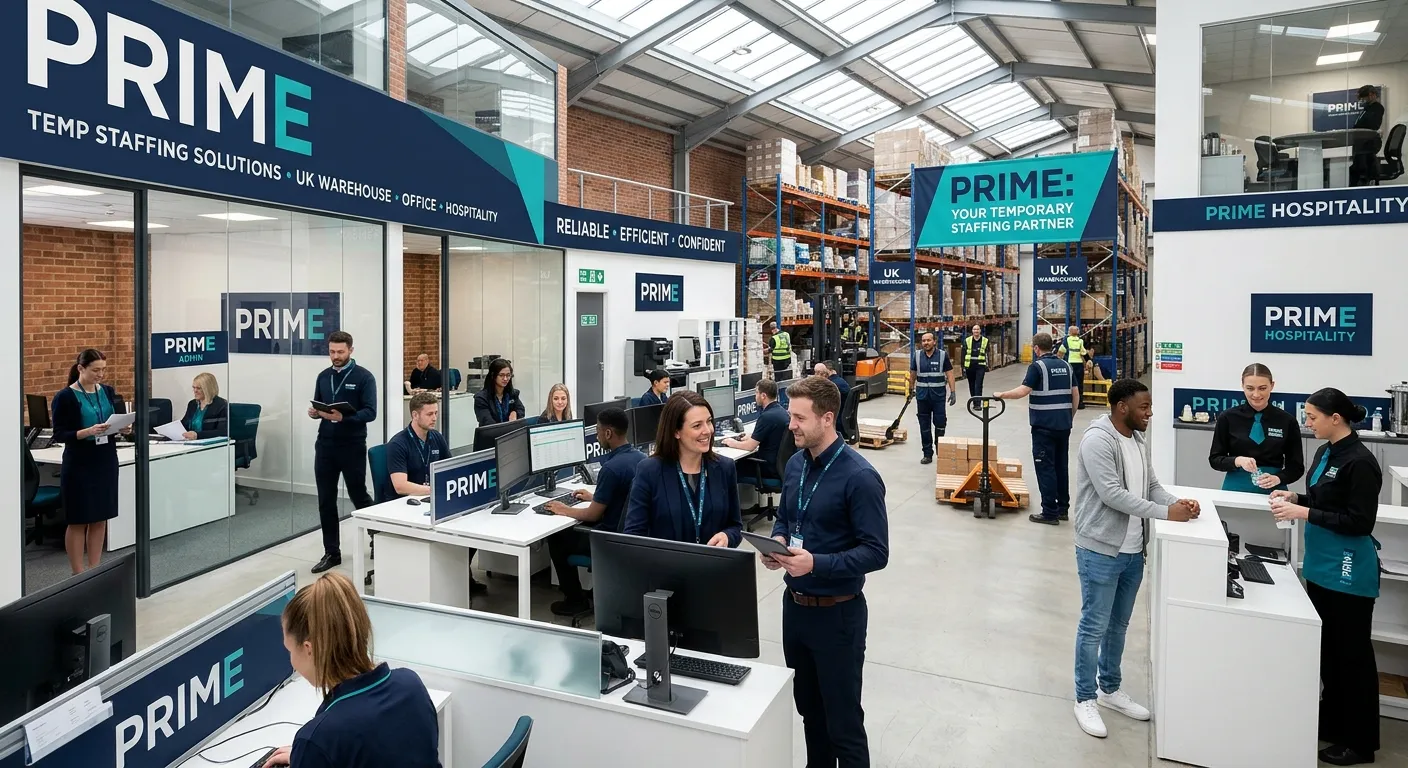
Use the tabs below to compare the main categories employers most often use when they need flexible workers. A modern temporary staffing agency should be able to explain its process for each sector, including screening, compliance, availability, and replacement support.
Warehouse and Industrial Staffing
Warehouse and industrial teams are often the most urgent. A temporary staffing agency can supply pickers, packers, forklift drivers, goods-in operatives, dispatch staff, and supervisors for night shifts, peak trading, stock counts, or new fulfilment centres. These placements need safety awareness, punctuality, and reliable attendance. Agencies that specialise in logistics often maintain pre-screened local pools, enabling same-day or next-day starts for urgent roles.
Office and Professional Staffing
Office and professional roles require accuracy, discretion, and strong communication. Temporary staffing agencies can place administrators, customer service representatives, finance clerks, HR assistants, project coordinators, and IT support staff. These workers may cover parental leave, back office queues, month-end reporting, or short-term projects. Because professional temp staff often interact with clients or confidential data, reputable agencies conduct enhanced screening and check references carefully.
Healthcare and Support Staffing
Healthcare and support placements are compliance-heavy. Agencies may provide healthcare assistants, support workers, receptionists, medical administration staff, and clinical support professionals depending on regulations and client needs. The agency must verify qualifications, background checks, immunisation status where required, and right-to-work documentation. Temporary staffing in this sector helps maintain service continuity while reducing the risk of unfilled shifts that could affect patient care.
Hospitality and Event Staffing
Hospitality and event staffing is highly seasonal and time-sensitive. A temporary staffing agency can provide receptionists, catering staff, housekeeping teams, baristas, stewards, and event assistants for conferences, hotels, retail openings, or festivals. Employers need flexible availability, customer-facing confidence, and quick onboarding. Agencies with strong local networks can fill short-notice shifts and manage replacements when staff call in sick.
Key Benefits of Using a Temporary Staffing Agency
Rapid Access to Vetted Talent
A temporary staffing agency can shortlist candidates within hours, not weeks. For urgent shifts, this matters because every unfilled role creates backlog, overtime costs, and customer frustration. Fast access is most valuable when demand spikes unexpectedly.
Workforce Flexibility
Employers can scale teams up during peak trading and down when demand normalises. This avoids overstaffing during quiet periods and prevents understaffing during launches, promotions, or seasonal events. Flexibility also supports project-based work where permanent hiring would be too slow or too costly.
Pre-screened Quality
Reputable agencies conduct interviews, reference checks, skills tests, and right-to-work verification before sending candidates. This saves managers from reviewing large volumes of unsuitable applications and reduces the chance of poor hires. Quality screening is especially important for safety-sensitive, customer-facing, or regulated roles.
Compliance Support
Temporary staffing contracts, payroll, timesheets, insurance, and employment law responsibilities are often managed by the agency. For employers, this reduces administrative errors and helps maintain a defensible audit trail. The right partner will explain who is responsible for each obligation before placement begins.
Replacement Cover
If a worker does not attend, resigns, or is unsuitable, a strong agency should provide a clear replacement guarantee. This protects continuity, especially for warehouse, hospitality, and healthcare teams where one absence can disrupt an entire operation. The replacement process should be fast and documented.
Trial-to-Perm Pathway
Temporary placements allow employers to evaluate a worker’s performance, attitude, and reliability before offering a permanent role. This lowers hiring risk and gives both parties time to confirm the fit. For candidates, temp work can be a practical route into long-term employment.
How a Temporary Staffing Agency Supports Modern Workforce Planning
Temporary staffing works best when it is planned, not improvised. The most successful employers treat their agency as a workforce partner, sharing forecasts, role requirements, shift patterns, safety expectations, and performance goals. That level of transparency helps the agency source better candidates and reduces replacement rates.
1. Hiring for Peaks, Projects, and Unplanned Absences
Seasonal retail, warehouse, hospitality, and construction demand can change rapidly. A temporary staffing agency helps employers respond to peaks without committing to permanent headcount. For example, a distribution centre may need extra pickers for a Black Friday surge, while a hotel may require additional receptionists for a conference week. The agency can maintain a bench of available workers and deploy them quickly.
For urgent roles, provide exact shift times, required licences, safety induction details, and the minimum experience needed. Vague briefs cause delays. If you need fast industrial cover, see Warehouse Jobs in Leeds for immediate-start recruitment expertise.
Pro Tip: Before contacting a temporary staffing agency, prepare a one-page role brief covering duties, shift pattern, required licences, pay expectations, site rules, and the reason for the vacancy. Clear briefs improve candidate quality and reduce time-to-start.
2. Reducing Administrative Burden
Permanent hiring involves sourcing, interviewing, checking references, drafting contracts, setting up payroll, managing onboarding, and tracking performance. Temporary staffing shifts much of that work to the agency. The employer still supervises daily performance, but the agency handles recruitment administration, timesheets, invoices, and often payroll. This frees managers to focus on operations rather than paperwork.
It also reduces internal recruitment costs. When a supervisor spends hours screening unsuitable applicants, the real cost is not only salary but lost productivity. A good agency filters candidates before they reach you. To understand how this works in practice, review Our Staffing Services.
3. Improving Candidate Quality
Quality is the difference between a good temporary staffing agency and a simple labour supply service. Agencies should conduct structured interviews, verify experience, test relevant skills, and check references. For warehouse roles, this may include forklift certification checks or manual handling knowledge. For office roles, it may include software proficiency. For healthcare or security-sensitive roles, background checks may be essential.
Ask how the agency sources candidates, how often it screens its pool, and what happens when a worker fails to meet expectations. A transparent agency will explain its vetting process and provide evidence. If you want a deeper breakdown, read The Ultimate Guide To Temp Work Staffing.
4. Managing Compliance and Payroll
Temporary staffing involves legal obligations that vary by role, sector, and employment structure. The agency may be responsible for right-to-work checks, contracts, payroll, holiday pay, pension requirements, and timesheet management. The client may be responsible for health and safety, induction, supervision, and site-specific compliance. Clear boundaries are essential.
Do not assume every agency handles the same obligations. Ask for written confirmation of who manages payroll, who provides insurance, who conducts background checks, and how absences or terminations are handled. A reliable temporary staffing agency will make these details simple and auditable. For broader planning, see Temporary Staffing Solutions Guide For Modern Businesses.
5. Understanding Temporary Staffing Costs
The hourly rate charged by a temporary staffing agency is usually higher than the worker’s gross pay because it includes recruitment, administration, employer’s national insurance, holiday pay, insurance, and profit. This does not mean the employer is overpaying. The agency is selling speed, screening, flexibility, and risk transfer.
To evaluate cost properly, compare the total cost of a bad hire, unfilled shift, overtime, or delayed project against the agency fee. For a warehouse that misses shipment deadlines, the cost of understaffing can far exceed the temporary staffing rate. If you want a clear pricing perspective, watch this short guide.
6. Temporary Staffing as a Temp-to-Perm Strategy
One of the most valuable uses of a temporary staffing agency is the temp-to-perm pathway. Instead of hiring a permanent employee based only on interviews, the employer can assess the worker on the job. This reduces the risk of cultural mismatch, poor performance, or hidden reliability issues.
For candidates, temporary work can provide experience, local references, and visibility with employers who may later offer permanent roles. Agencies that support conversion should communicate the process clearly: how many weeks of good performance may lead to a permanent offer, who pays the conversion fee, and what terms apply. This makes temporary staffing a strategic talent pipeline, not just a stopgap.
7. Choosing the Right Temporary Staffing Agency
When selecting a temporary staffing agency, ask more than “How fast can you send someone?” The best partners ask about your workload, team culture, safety standards, shift patterns, and long-term goals. They should provide a named consultant, clear service level agreements, and regular reporting. Test their responsiveness before you sign a contract.
Check whether the agency has experience in your specific sector. A generalist may fill a reception role quickly, but a specialist agency will understand the pressures of a busy warehouse, clinical environment, or hospitality venue. Look for reviews, replacement guarantees, compliance credentials, and references from similar clients. A strong temporary staffing agency will welcome due diligence.
- Ask for a written candidate screening process.
- Confirm replacement guarantees and response times.
- Request examples of similar roles they have filled.
- Clarify payroll, insurance, and compliance responsibilities.
- Review how they collect feedback from both employers and workers.
Pro Tip: Use a rolling 90-day forecast with your temporary staffing agency. Even if exact numbers change, early visibility of peaks, leave periods, and project work helps the agency build a stronger candidate pool before urgency hits.
8. Onboarding and Retention
Placing a worker is only the first step. Effective onboarding determines whether the placement succeeds. The employer should provide a clear induction, safety briefing, contact person, and realistic expectations. The agency should confirm that the worker understands shift times, pay terms, dress code, and site rules before starting.
Retention is also important. Temporary workers often leave because of poor communication, inconsistent shifts, unclear expectations, or feeling undervalued. Simple actions can improve stability: pay on time, introduce the team, give feedback, provide safe equipment, and treat temporary staff as part of the workforce. A temporary staffing agency that cares about retention will track attendance, ask for feedback, and intervene early when issues appear.
9. Common Mistakes Employers Should Avoid
One common mistake is treating temporary staffing as a last-minute scramble. If you wait until a shift is already unfilled, you may accept a less suitable candidate. Another mistake is giving an incomplete brief. A worker who is technically skilled but unfamiliar with your safety system can create more risk than benefit. Finally, employers sometimes fail to supervise temporary staff properly, which leads to poor performance and higher replacements.
A better approach is to plan recurring peaks, maintain a rolling forecast with your agency, and review placement quality monthly. Ask for candidate feedback, monitor absence rates, and discuss improvement actions with the agency. This turns temporary staffing from a reactive fix into a managed workforce strategy.
Expert Insight: What Makes a Temporary Staffing Agency Reliable
From an operational perspective, the most reliable temporary staffing agency is not measured by the number of workers it can send. It is measured by the quality of its replacements, the clarity of its communication, and its willingness to take responsibility when a placement goes wrong. Agencies that only chase volume often produce high turnover, mismatched candidates, and frustrated managers. Agencies that treat recruitment as a service relationship build repeat business.
Look for a partner that asks follow-up questions, shares candidate notes, flags risks early, and provides a single point of contact. The right temporary staffing agency will not just fill a gap; it will help you understand why the gap exists and how to prevent it next quarter.
FAQ: Temporary Staffing Agency Questions Answered
Need Flexible Workers Fast? Hire Staff Today with Expert Temporary Staffing Support
Whether you need warehouse operatives, office professionals, healthcare support, hospitality teams, or urgent short-notice cover, the right temporary staffing agency can help you reduce hiring delays, improve workforce flexibility, and maintain compliance. Post your role now and let a specialist recruitment team match you with vetted candidates ready to start.