


Does Amazon Hire Full Time Employees? Your Comprehensive Hiring Guide
Navigating the vast employment landscape at one of the world's largest companies can be complex. This in-depth guide explores Amazon's hiring strategies, from full-time roles to flexible seasonal positions, and reveals how modern staffing solutions can bridge the talent gap for businesses of all sizes.
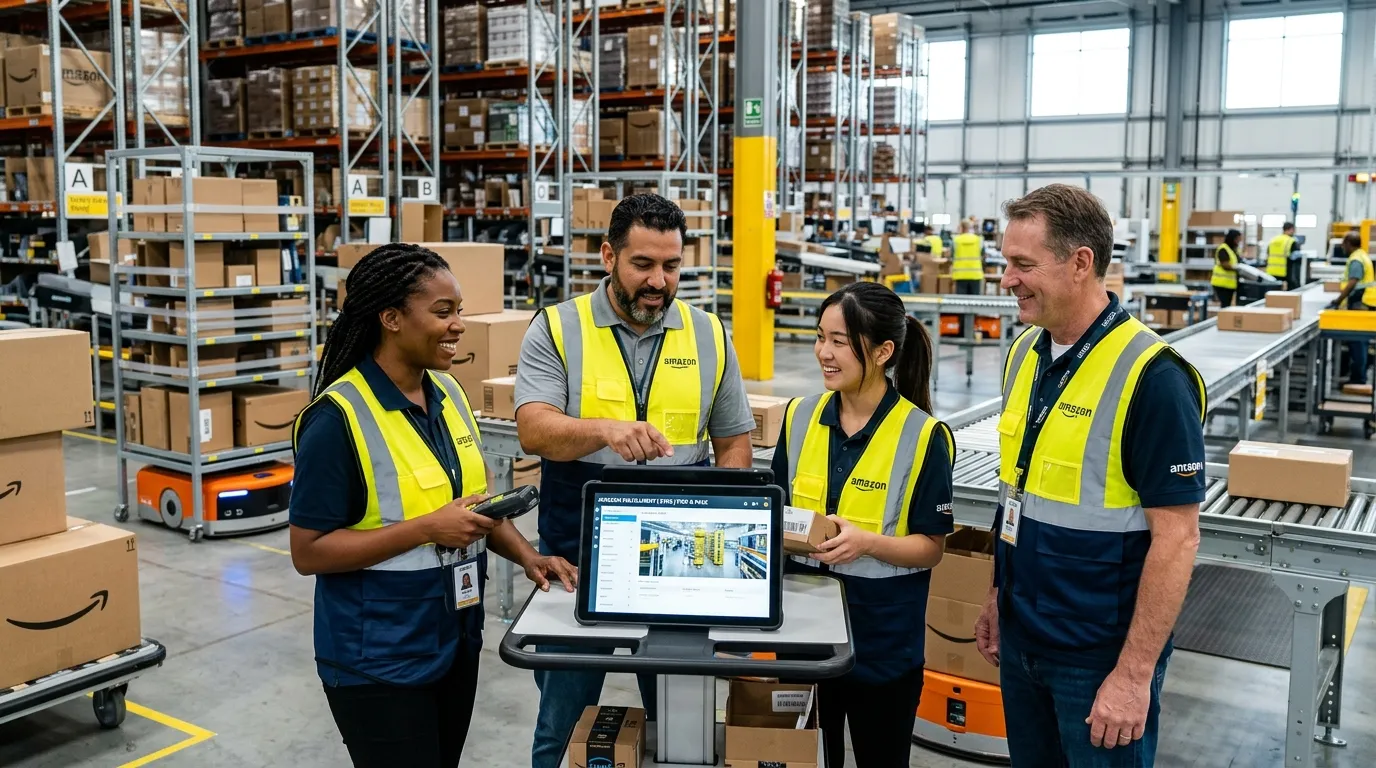
Amazon, a global titan in e-commerce and technology, operates on a scale that necessitates a vast and varied workforce. A common question from job seekers and industry observers alike is: Does Amazon hire full time employees? The answer is a definitive yes, but their employment model is a sophisticated blend of permanent, temporary, and seasonal staffing designed to meet fluctuating demand. Understanding this model is crucial not only for potential applicants but also for businesses looking to emulate operational efficiency. Many companies, facing similar scalability challenges, turn to specialized agencies for temporary staffing solutions to manage their workforce dynamically.
Amazon's Employment Ecosystem: A Multi-Category Overview
Amazon's hiring strategy is multifaceted. Use the tabs below to explore the different categories of employment they utilize to power their global operations.
The Backbone: Full-Time Amazon Associates
Full-time positions form the core of Amazon's operational workforce. These roles, often referred to as"Amazon Associates," are found primarily in Fulfilment Centres (FCs), Sortation Centres, and Delivery Stations. Employees typically work set schedules of 40+ hours per week and receive a comprehensive benefits package that can include health insurance, retirement plans, stock options, and Amazon's innovative Career Choice program, which pre-pays tuition for education in high-demand fields.
The recruitment process for these roles is streamlined through the Amazon.jobs website. Candidates often undergo online assessments, virtual or in-person interviews, and must pass background checks. The scale of hiring is immense, especially when new facilities launch. For other businesses needing to scale their own operations rapidly—whether in warehouse logistics or other sectors—partnering with an expert agency can provide a similar scalable pipeline of pre-vetted talent.
Pro Tip for Job Seekers:
When applying for full-time Amazon roles, highlight reliability, safety awareness, and process adherence. These are highly valued traits in their logistics network. Prepare for interviews that may include scenario-based questions about teamwork and problem-solving in a fast-paced environment.
Scaling for Demand: Amazon's Seasonal Workforce
Amazon's hiring of seasonal workers is legendary, particularly during the peak retail periods of Prime Day, Black Friday, and the Christmas holiday season. These temporary positions are critical for managing the exponential surge in order volume. Seasonal hires perform many of the same duties as full-time associates—picking, packing, stowing, and receiving—but with contracts typically lasting from a few weeks to several months.
This model offers flexibility for both Amazon and workers. For the company, it allows precise scaling of labour costs with demand. For workers, it provides entry points into the company, supplemental income, and the potential for seasonal roles to convert to full-time positions based on performance and business need. The strategic use of hiring seasonal workers is a best practice many industries adopt. For instance, a business looking for field operatives with immediate start or warehouse staff in Leeds can leverage agencies to replicate this on-demand staffing model efficiently.
Beyond the Warehouse: Corporate & Tech Careers
Amazon's hiring extends far beyond its logistics network. The company aggressively recruits full-time professionals for corporate offices worldwide in areas like software development (Amazon Web Services), machine learning, finance, marketing, and human resources. These roles are highly competitive and require specific, often advanced, skill sets.
The process for these positions involves multiple technical interviews,"bar-raiser" assessments (conducted by employees trained to evaluate candidates against Amazon's Leadership Principles), and complex problem-solving exercises. While Amazon fills most of these roles directly, the broader market for specialized talent often requires a targeted approach. Whether seeking a virtual bot developer or niche medical writers, businesses can benefit from the focused networks of expert staffing agencies to find top-tier professional talent.
Key Benefits & Pathways of Amazon Employment
Pathway to Permanency
Many seasonal Amazon roles are designed as"try-before-you-hire" opportunities. Exceptional performers are frequently offered full-time"blue badge" positions, making it a strategic entry point for long-term career seekers. This conversion model is a cornerstone of flexible staffing.
Competitive Compensation & Upskilling
Amazon offers above-minimum wage rates, overtime pay, and, for full-timers, a notable benefits suite. The Career Choice program is a standout, investing in employee futures by funding education in high-demand fields, a model that enhances retention and skill development.
Operational Flexibility & Scalability
The blend of full-time and seasonal hiring allows Amazon to scale its workforce up or down with precision, managing costs effectively. This is a critical lesson for any business in a cyclical industry. Agencies specializing in comprehensive staffing services enable smaller firms to achieve similar agility.
Decoding the Hiring Process & Lessons for Your Business
The Step-by-Step Journey to an Amazon Role
Understanding Amazon's hiring funnel provides insight into modern, high-volume recruitment:
- Online Application & Assessment: Candidates apply via Amazon.jobs and often complete virtual assessments testing work preferences and problem-solving.
- Document Verification & Background Check: Successful candidates proceed to identity and right-to-work checks, a standard but crucial compliance step.
- Interview & Onboarding: For many FC roles, this may be a group onboarding session. Corporate roles involve multi-round, principle-based interviews.
- Offer & Start Date: Offers are contingent on all checks. Start dates are often coordinated in cohorts to streamline training.
Strategic Insights: What Amazon's Model Teaches Us
Amazon's approach demonstrates that a one-size-fits-all hiring strategy is obsolete. The future belongs to blended workforce models. Companies can learn to:
- Build a Core and Flex Model: Maintain a stable core of full-time employees (does Amazon hire full time employees? Yes, for stability) supported by a flexible periphery of temporary or seasonal staff for peak demands.
- Invest in Technology: Leverage AI and platforms for screening, scheduling, and management to handle high-volume hiring efficiently.
- Partner for Agility: You don't need Amazon's internal HR scale to be agile. Partnering with a specialist agency provides instant access to a vetted talent pool for roles ranging from hotel receptionists to helpdesk support in Cambridge, much like Amazon's seasonal hiring.
- Focus on Conversion Pathways: Treat temporary roles as extended interviews. This lowers the risk of a bad permanent hire and boosts morale by offering temporary staff a clear path to permanency.
For a deeper dive into building these adaptable teams, explore our guide on temp work staffing.
Frequently Asked Questions
Clear answers to common questions about Amazon's hiring practices and flexible workforce strategies.
Does Amazon prefer to hire seasonal workers over full-time employees?
No, Amazon does not prefer one over the other; they serve different strategic purposes. Full-time employees provide operational stability, deep institutional knowledge, and are essential for core functions. Seasonal workers provide critical, cost-effective scalability to handle predictable demand spikes. The ideal model, which Amazon employs, is a balanced mix of both. For businesses looking to implement a similar strategy, exploring quick hire solutions can facilitate the flexible component of this mix.
What is the difference between a"white badge" and"blue badge" at Amazon?
This is a key distinction in Amazon's logistics workforce. A White Badge typically denotes a seasonal, temporary, or agency-contracted employee. Their access is often time-limited. A Blue Badge is a full-time, permanent Amazon employee with full access to the company's benefits package and long-term career pathways. Conversion from white to blue badge is a common goal for many temporary workers, based on performance and business need.
How can my business replicate Amazon's flexible staffing model?
You don't need a massive internal HR department. The most effective way is to partner with a specialized staffing agency. A good agency acts as your flexible workforce department, handling recruitment, vetting, payroll, and compliance. This allows you to maintain a core full-time team while seamlessly scaling up with pre-qualified temporary or seasonal staff during busy periods, whether you need staff for a specific project or ongoing support. It provides Amazon-level agility without the overhead.
Are Amazon's hiring practices a good indicator of broader job market trends?
Absolutely. Amazon is a bellwether for the modern economy. Their heavy reliance on a mixed workforce signals a broader shift towards flexibility, project-based work, and on-demand labour across industries—from logistics to tech. The emphasis on upskilling (via Career Choice) reflects the need for continuous learning. The question"does Amazon hire full time employees?" is part of a larger conversation about the evolving employer-employee contract, where stability and flexibility must coexist. Businesses that understand this, like those leveraging resources from our experienced team, are best positioned for future success.
Ready to Build Your Agile Workforce?
Whether you're inspired by Amazon's model of blending full-time and seasonal staff, or you need to fill critical roles fast, the right partnership makes all the difference. Transform your hiring from a bottleneck into a strategic advantage.
Don't just wonder about how giants like Amazon hire. Build a smarter, more responsive workforce today. Start by posting your vacancy and let us connect you with the talent you need to scale.
Case Study: Inside an Amazon Peak Season Hiring Blitz
To truly understand the scale and sophistication of Amazon's hiring model, let's examine a real-world scenario: the launch of a new Fulfilment Centre (FC) ahead of the holiday season.
The Challenge: Staffing a 1.2 Million Sq. Ft. Facility in 90 Days
When Amazon opens a new FC, the staffing target can range from 1,500 to 3,000+ employees before the first package is shipped. This isn't just about filling roles; it's about creating a fully trained, safety-certified, and process-oriented workforce from scratch in a matter of weeks. The strategy is a masterclass in parallel processing:
1 Phased Recruitment Waves
Hiring doesn't happen all at once. Amazon launches recruitment in waves: leadership and trainers first, followed by a core group of full-time associates, and finally, the bulk of seasonal hires. This ensures a trickle-down training model where experienced staff can mentor newcomers. Businesses can achieve similar structured scaling by using agencies for on-demand staffing, securing team leaders before a general hiring push.
2 Hyper-Localized Sourcing
Amazon partners with local job centers, community colleges, and hosts massive hiring events. They tailor their messaging to the local economy, highlighting benefits like schedule flexibility or tuition programs. This localized approach is a key takeaway: effective hiring meets people where they are. A staffing agency with deep regional networks, like one sourcing warehouse staff in Leeds, replicates this hyper-local advantage.
Outcome & Business Lesson: A successfully launched FC demonstrates that massive scaling is possible with a hybrid workforce model. The critical factor is orchestration—having clear processes and, often, external partners to manage the influx. For a business, attempting this scale alone risks quality and safety breakdowns. The lesson is to build a playbook and secure partners before the surge hits.
The Invisible Engine: How Tech & Data Drive Amazon Hiring
Behind the scenes, Amazon's hiring prowess is powered by sophisticated technology and data analytics. This isn't just about posting jobs online; it's about a predictive, efficient, and candidate-centric system.
AI-Powered Screening & Matching
Amazon uses artificial intelligence to streamline the initial screening of millions of applications. Their virtual"chattr" assessments analyze not just answers, but language patterns and problem-solving approaches to predict candidate fit and longevity. This reduces time-to-hire dramatically.
For other businesses, this level of tech investment is out of reach. However, partnering with a tech-forward staffing agency provides a similar benefit. These agencies use advanced Applicant Tracking Systems (ATS) and candidate matching algorithms to present only the most qualified individuals for roles, whether for a virtual bot developer or a team of hospitality staff.
Data Point:
Amazon has reduced its average hiring timeline for FC associates by over 60% in recent years, largely through automation of administrative tasks and intelligent scheduling of interviews and onboarding.
Predictive Analytics for Workforce Planning
Amazon doesn't guess how many seasonal workers it will need. It uses predictive models that analyze historical sales data, current order trends, regional weather patterns, and even local event calendars to forecast labour needs down to the hour and specific location.
This moves hiring from a reactive to a proactive function. While most companies lack this data science capability, the principle is vital: use the data you have. Analyze your sales cycles, project timelines, and seasonal busy periods. Then, work with your staffing partner to build a talent pipeline in advance. If you know you need extra helpdesk support in Q4, start the conversation with an agency in Q3.
The Model in Action: Beyond E-Commerce
Amazon's core-periphery staffing model isn't unique to mega-corporations. It's being successfully adapted across diverse sectors.
Hospitality & Events
A luxury hotel chain maintains a core team of full-time concierge, management, and senior catering staff. For weddings, conferences, and holiday seasons, they seamlessly integrate temporary specialists: seasoned hotel receptionists, banquet servers, and event coordinators sourced through an agency. This ensures flawless guest experiences during peaks without year-round overhead.
Key Takeaway: The"core" ensures brand consistency; the"flex" ensures scalable excellence.
Manufacturing & Logistics
A mid-sized manufacturer of seasonal goods (e.g., garden furniture) uses a small full-time team for R&D, machine maintenance, and quality control. For the spring/summer production sprint, they scale the production line with trained field operatives and warehouse staff. An agency handles all recruitment, safety inductions, and payroll, allowing management to focus on output and quality.
Key Takeaway: Flexibility protects margins in cyclical industries.
Making the Hybrid Model Work For You
Implementing this model requires a shift in mindset. It's about viewing your workforce not as a fixed cost, but as a dynamic resource. Start with an audit:
- Identify Core vs. Flex Roles: Which positions are essential to your business DNA and require deep institutional knowledge? Which roles have fluctuating demand based on projects, seasons, or contracts?
- Select the Right Partner: Choose a staffing agency that specializes in your industry. Their existing talent pool and understanding of your specific skill requirements (from niche tech to specialized logistics) are invaluable.
- Create Clear Conversion Criteria: If conversion from temp-to-perm is a goal, define the performance metrics and timeline upfront. This motivates temporary staff and creates a fair, transparent pathway.
The question"does Amazon hire full time employees?" is just the beginning. The real insight is how they orchestrate full-time and temporary talent into a resilient, high-performing whole. That orchestration is a service modern staffing agencies provide, turning a complex hiring strategy into a simple, operational reality for businesses ready to scale intelligently.