


Candidate Screening Strategies for 2026: How to Find & Hire Elite Talent Fast
Future-proof your hiring process with next-generation screening techniques. Discover the AI tools, predictive analytics, and human-centric methods that will define successful recruitment in 2026 and beyond.
Post a Job & Start Screening TodayThe 2026 Screening Landscape: A Multi-Faceted Approach
The race to find talent is evolving. By 2026, successful candidate screening will blend cutting-edge technology with deep human insight. Explore the core pillars below.
Intelligent Automation for High-Volume Screening
By 2026, AI won't just be a tool; it will be your primary screening co-pilot. Advanced Natural Language Processing (NLP) will parse CVs not just for keywords, but for context, project impact, and skill adjacency. This is crucial for talent sourcing in high-volume sectors like warehouse or recruitment jobs in Manchester, where speed is critical.
Automated video interview analysis will assess verbal fluency, non-verbal cues, and even tonal sentiment, providing a consistent first-round filter. This allows human recruiters to focus on the most promising candidates, dramatically improving efficiency in your quest to best hire employees.
Pro-Tip:
Implement AI chatbots for initial candidate Q&A. This engages applicants instantly, collects standardized pre-screening data, and provides 24/7 interaction, enhancing your employer brand while filtering for basic role suitability.
Data-Driven Predictors of Success & Retention
Screening in 2026 moves beyond"can they do the job" to"will they thrive and stay?" Predictive analytics will use historical data from your own organization and industry benchmarks to score candidates on retention likelihood, cultural add (not just fit), and performance trajectory.
For example, when using temporary staffing solutions, predictive models can identify which temp workers have the highest probability of transitioning successfully to permanent roles, or which skills combinations lead to the longest tenure in specific positions, such as those found in our supply chain roles.
Strategic Insight:
Integrate your ATS with performance management software. The feedback loop created allows your predictive models to learn and improve continuously, making your candidate screening strategies for 2026 more accurate with every hire.
Screening for Human Skills & Cognitive Agility
As automation handles administrative tasks, the human element of screening will elevate to assess capabilities machines cannot: complex problem-solving, ethical reasoning, adaptability, and collaborative intelligence. Structured interviews will use scenario-based and situational judgement tests more heavily.
This is especially vital for roles requiring high levels of judgement and interpersonal skills, such as those in specialized fields like nuclear engineering or client-facing positions like a doctor's receptionist. Screening must verify not only technical competence but also resilience and communication under pressure.
Pro-Tip:
Incorporate brief, timed cognitive or work-sample tests into the early application process. This provides a tangible, equitable metric for problem-solving ability and reduces unconscious bias by focusing on output rather than pedigree.
Core Strategies to Optimize Your 2026 Hiring Process
Implement these actionable candidate screening strategies for 2026 to build a faster, fairer, and more effective hiring engine.
Skills-Based & Blind Screening
Move beyond traditional CVs. Use initial assessments, anonymized work samples, and verified skill badges to evaluate candidates. This reduces bias and surfaces talent from non-traditional backgrounds, widening your pool when you need to find talent quickly.
Platforms that facilitate this are key for staff augmentation projects, where specific, immediate skills are required over long-term career history.
Continuous Talent Pool Nurturing
Screening starts long before a job is posted. Build and engage a community of potential candidates through talent networks, re-skilling programs, and keep-warm campaigns. This turns your talent sourcing into a proactive pipeline, not a reactive scramble.
This strategy is aligned with concepts in our future-proof your team guide, emphasizing long-term strategic workforce planning.
Integrated Candidate Experience Analytics
Track every touchpoint. Use analytics to see where top candidates drop off, how long each stage takes, and what communication methods yield the best response rates. Optimizing this journey is a core part of how to optimize hire employees processes.
A poor screening experience can damage your employer brand, causing you to lose the best candidates to competitors with smoother processes.
Leverage Specialized Recruitment Outsourcing
For niche roles or peak hiring periods, partnering with experts provides immediate access to sophisticated screening methodologies. Recruitment outsourcing firms bring market intelligence, pre-vetted talent pools, and scalable resources.
Explore our comprehensive staffing services to understand how external expertise can streamline your screening for roles from helpdesk staff in Cambridge to executive leadership.
Gamified & Immersive Assessments
Engage candidates and assess real-world skills through job-relevant games and virtual reality simulations. This is particularly effective for evaluating situational judgement, technical proficiency, and learning agility in a low-pressure, yet revealing, environment.
Such innovative methods are part of the HR solutions that forward-thinking companies are adopting to attract digitally-native talent.
Ethical AI & Bias Auditing
As AI tools become ubiquitous, regular audits for algorithmic bias are non-negotiable. Establish a governance framework to ensure your screening tools are fair, transparent, and compliant with evolving regulations. This protects your company and builds trust with candidates.
Ethical screening is foundational to building a diverse and innovative team, a principle detailed in our guide to building a stellar team.
Quantifying Success: The ROI of Advanced Screening
Implementing next-generation candidate screening strategies for 2026 requires investment. The return, however, is quantifiable across multiple key business metrics.
From Cost Center to Value Driver
Advanced screening directly reduces time-to-hire and cost-per-hire by automating manual tasks and improving first-pass accuracy. More importantly, it dramatically increases quality-of-hire—the ultimate metric. A superior screening process identifies candidates who perform better, stay longer, and contribute more to culture.
Consider the impact on project-based work. Efficient screening for staff augmentation needs means you can onboard skilled temporary workers—like those for field operatives in DY4—within days, not weeks, keeping projects on schedule and budget.
Real-World Impact:
Companies that leverage data-driven screening report up to a 40% reduction in turnover and a 30% increase in hiring manager satisfaction. This transforms your recruitment function from a tactical necessity into a strategic competitive advantage.
Key Performance Indicators (KPIs) for 2026 Screening
-
✓
Screening-to-Interview Ratio: What percentage of screened candidates proceed? Aim for higher quality, not higher volume.
-
✓
Candidate Net Promoter Score (NPS): Measure the applicant's experience directly. A positive screening process markets your company.
-
✓
Predictive Validity Score: How well did your screening assessments correlate with on-the-job performance after 6/12 months?
-
✓
Diversity of Pipeline Post-Screening: Audit if your screening tools are broadening or narrowing the demographic makeup of your shortlist.
The Tangible Cost of Inefficient Screening
Understanding the financial impact of your current process is the first step towards how to optimize hire employees strategies. This video breaks down the real economics.
As highlighted in the video, the cost of a bad hire extends far beyond salary. An inefficient screening process that misses red flags or rejects top talent is a direct drain on productivity and morale. Partnering with experts for recruitment outsourcing or utilizing a strategic quick hire service can mitigate these risks by providing pre-vetted, high-quality candidates.
FAQs: Candidate Screening Strategies for 2026
Get expert answers to the most pressing questions about modernizing your candidate screening process.
How can small businesses afford advanced AI screening tools?
Many AI screening tools are now available via Software-as-a-Service (SaaS) models with tiered pricing, making them accessible for SMBs. Furthermore, the most cost-effective strategy is often recruitment outsourcing or using a specialized agency. By leveraging their technology and expertise on a per-hire basis, you gain access to top-tier screening without the capital investment. For immediate needs, our find staff portal connects you with pre-screened talent instantly.
Won't over-automating screening create a impersonal candidate experience?
This is a crucial balance. The goal of automation is to handle repetitive, administrative tasks (CV parsing, scheduling) to free up human time for meaningful interaction. The best candidate screening strategies for 2026 use automation for efficiency but design touchpoints—like personalized video messages from recruiters or constructive feedback post-assessment—to maintain a human connection. Transparency about the process is key.
How do I screen for soft skills and cultural add effectively?
Use structured, behaviorally-anchored interview questions focused on past actions in specific scenarios. Incorporate panel interviews with diverse team members. Tools like situational judgement tests (SJTs) and even some advanced AI can analyze language and problem-solving approaches in written or video responses. For consistent results across locations—like when hiring for recruitment jobs in Birmingham and talent acquisition jobs in Leeds—a standardized scoring rubric is essential.
Is screening for temporary roles different from permanent hiring?
The core principles are similar, but the emphasis shifts. For temp roles, speed, reliability, and specific skill verification are often paramount over long-term growth potential. Screening must be rapid yet robust, often relying on verified skills databases and immediate availability checks. A deep understanding of temp work staffing is crucial. Effective screening here ensures low no-show rates and high on-the-job performance from day one, which is why many businesses partner with agencies who specialize in this rapid, high-volume screening.
What's the first step I should take to modernize my screening process?
Conduct an audit. Map your current screening funnel from application to offer. Identify the biggest bottlenecks, the highest drop-off points, and gather feedback from both candidates and hiring managers. Then, pilot one new technology or method in your most problematic area. For many, the most impactful first step is to post a job with a refined, skills-focused job description and pair it with a simple, standardized work sample test to immediately improve the quality of your applicant pool.
Ready to Implement 2026 Screening Today?
Don't wait for the future of hiring to arrive. Transform your candidate screening strategies now to find talent faster, make better hires, and build a resilient, future-proof workforce. Whether you need comprehensive HR solutions or rapid staff augmentation, the journey starts with a single step.
For specialized guidance on temporary staffing, explore our modern business flexibility guide or dive into our common hire employees guide for foundational best practices.
Building a Dynamic Skills Taxonomy: The Foundation of 2026 Screening
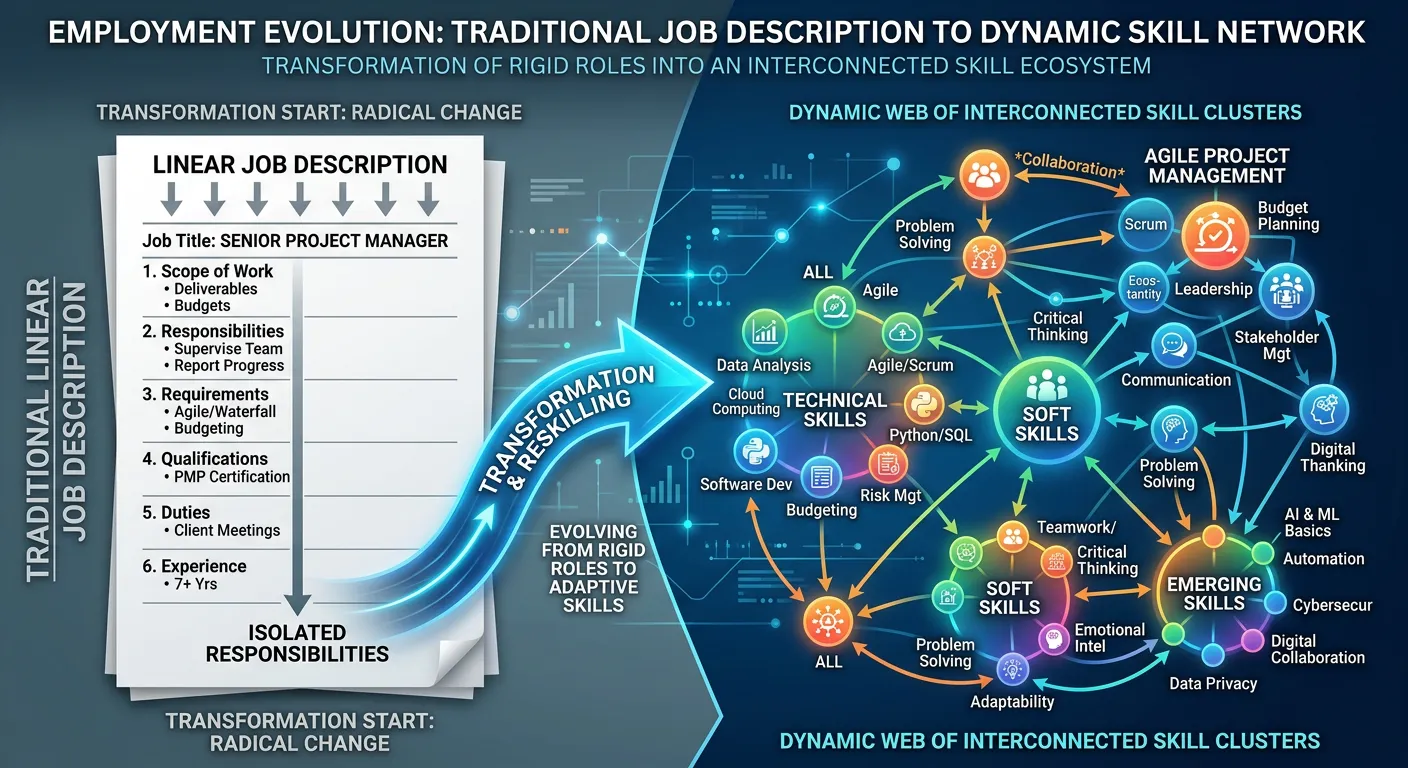
The future of effective screening lies in moving from static job descriptions to a living, breathing skills taxonomy. This internal framework maps and categorizes every skill required across your organization, from technical proficiencies to human-centric capabilities.
From Job Descriptions to Skills Clusters
Traditional job descriptions list requirements in isolation. A skills taxonomy groups them into clusters (e.g.,"Data Visualization,""Stakeholder Negotiation,""Agile Project Management"). This allows screening tools to identify adjacent skills—competencies a candidate may not explicitly list but are implied by their proven abilities. For instance, a candidate with deep experience in supply chain optimization likely possesses strong analytical and logistical problem-solving skills transferable to roles in operational management or data analysis.
This approach is vital for staff augmentation, where you need to precisely match a temporary worker's skill cluster to a project's immediate needs, ensuring they can contribute from day one without extensive training.
Case Study: Tech Sector Upskilling
A mid-sized SaaS company struggled to fill"Cloud Security Analyst" roles. By analyzing their skills taxonomy, they identified that internal candidates from their network administration team possessed 70% of the required skill cluster (networking, system monitoring, compliance awareness). They screened these internal candidates for learning agility and partnered with a training provider for the specific cloud security certifications. Within 6 months, they filled 3 critical roles internally, saving over £45,000 in hiring costs and boosting retention.
This proactive talent sourcing and screening of internal mobility candidates is a hallmark of a future-proof strategy.
Mapping & Optimizing the Candidate Screening Journey
Every interaction a candidate has with your screening process shapes their perception of your employer brand. A disjointed journey can cause top talent to abandon the process, while a seamless one can turn applicants into advocates, even if they aren't hired.
The Seven Critical Touchpoints
-
1. Pre-Application Awareness & Job Discovery
Screening begins at the job advert. Is it clear, engaging, and skills-focused? Does it accurately reflect your culture? Tools like SEO-optimized career pages and transparent salary bands act as the first filter, attracting more suitable applicants. For niche roles like a nuclear engineer, detailed project descriptions can screen for genuine specialist interest.
-
2. The Application & Initial Data Capture
Is the application mobile-optimized? Can candidates import their LinkedIn profile? Forcing manual entry of every detail on a desktop-only form will lose up to 60% of potential applicants. This stage should collect data in a structured format for your ATS and AI tools to parse effectively.
-
3. The First Acknowledgment & Timeline Setting
An immediate, automated"thank you" email is expected. The differentiator is setting clear expectations:"You will hear back from a human within 5 business days." This reduces anxiety and candidate ghosting, a critical factor when you need to best hire employees in a competitive market.
-
4. The Assessment Stage (Tests, Work Samples, Video)
This must be relevant, respectful of time, and provide value. A 2-hour unpaid task for a junior role is a red flag. Instead, a 30-minute job simulation or a brief cognitive test provides equitable data. Always explain why the assessment is used—it screens for job success and gives candidates a realistic preview of the work.
-
5. Human Interaction & Interview Scheduling
Use AI schedulers (like Calendly integrated with your ATS) to eliminate scheduling friction. Provide candidates with interviewer biographies and the interview format beforehand. For high-volume roles, such as helpdesk staff in Cambridge, structured video interviews with standardized questions ensure consistency and fairness.
-
6. The Decision & Offer Communication
Speed is crucial. Delays communicate indecision and can cause you to lose candidates. For those not selected, personalized (or well-templated) rejection feedback is a golden opportunity for brand building. It turns a rejection into a respectful closure.
-
7. Post-Offer Onboarding & Pre-boarding
Screening doesn't end at the offer acceptance. The"pre-boarding" period—the time between signing and starting—is part of the experience. Engage new hires with team introductions, training modules, and company swag. This solidifies their decision and reduces last-minute drop-offs.
Actionable Insight:
Conduct a quarterly"candidate journey audit." Have someone on your team (or a trusted outsider) anonymously apply to one of your open roles. Document every step, timing, and communication. The insights will directly inform how to optimize hire employees processes by revealing friction you are otherwise blind to.
Navigating Global Compliance in a Digitally-Connected World
As remote work and global talent sourcing become standard, your screening process must adapt to a complex web of international data privacy laws (GDPR, CCPA), employment regulations, and cultural nuances. A one-size-fits-all approach is a significant legal and reputational risk.
Data Sovereignty & Candidate Privacy
Where is your applicant data stored? If you use an AI screening tool based in the US to assess candidates in the EU, you must ensure GDPR-compliant data transfer mechanisms are in place. Candidates have the"right to explanation" for automated decisions; your process must be able to provide a meaningful, transparent rationale if a candidate is rejected by an algorithm.
This is especially critical when using recruitment outsourcing partners. Ensure their data handling and screening methodologies are audited and compliant in all jurisdictions where you operate.
Cultural Validity of Assessments
A cognitive or personality test designed and normed in one country may be culturally biased in another. Screening for a"cultural add" in a global team requires assessments that are validated across different cultural contexts. For example, communication styles deemed"assertive" in one culture might be perceived as"aggressive" in another.
When building teams across regions—for instance, screening for roles in both Birmingham and a new office in Berlin—local HR expertise or a globally-aware partner is indispensable to adapt your core candidate screening strategies for 2026 appropriately.
Checklist: Global Screening Compliance
-
✔
Explicit, informed consent for data processing and automated screening tools is obtained.
-
✔
Background check procedures are legally validated for each country (rules vary dramatically).
-
✔
Video interviewing platforms are chosen with end-to-end encryption and data residency options.
-
✔
All assessment vendors provide documentation on cross-cultural validity studies.