


Find & Fill Top Labouring Jobs in London: Your Complete 2026 Hiring Guide
Navigate the dynamic London construction and industrial labour market. Discover how to secure reliable, skilled labourers or fill urgent vacancies with our expert staffing strategies and immediate-start solutions.

London's skyline is a testament to constant growth, demanding a robust and flexible labour force. Labouring jobs in London form the backbone of the city's construction, infrastructure, and industrial sectors. Whether you're a site manager facing a sudden project surge, a facilities company needing extra hands, or a skilled labourer seeking your next opportunity, understanding this market is crucial. This comprehensive guide delves into the types of roles available, the skills required, salary expectations, and the most effective strategies for both hiring and getting hired in 2026. From traditional construction sites to specialised event setup and warehouse logistics, the demand for reliable, physically capable, and safety-conscious labourers has never been higher. Leveraging a specialised agency can transform this challenging process, connecting top talent with urgent projects seamlessly, much like our proven methods for warehouse jobs in Leeds.
Pro-Tip for Employers:
The speed of hiring directly impacts project timelines and costs. Partnering with an agency that offers verified, CSCS-holding labourers can reduce your time-to-hire from weeks to hours, protecting your bottom line. Explore our broader insights in the Temporary Staffing Solutions Guide for Modern Businesses.
The London Labouring Landscape: A Multi-Sector Overview
Understanding Demand and Drivers
London's labouring market is fuelled by major infrastructure projects like HS2, Thames Tideway Tunnel, and countless commercial and residential developments. Beyond construction, there is sustained demand in sectors like logistics, events, facilities management, and demolition. This creates a diverse ecosystem of labouring jobs in London, ranging from general site assistants to skilled plant operatives. The market is characterised by project-based work, leading to fluctuating demand that perfectly suits temporary and contract staffing solutions. This flexibility is a cornerstone of modern workforce planning, a concept explored in depth in our resource on Temporary Staffing Solutions for Modern Business Flexibility.
Seasonality also plays a role, with outdoor work peaking in spring and summer, while internal refurbishments and warehouse logistics see steadier year-round demand. The post-2020 emphasis on rapid project delivery and supply chain resilience has made access to a reliable, on-demand labour pool a critical competitive advantage for businesses.
From General Labourers to Skilled Operatives
Not all labouring roles are the same. Understanding the specialisations helps in targeting the right talent.
- General Construction Labourer: The foundation of any site. Duties include material handling, site clearance, assisting trades, and keeping areas tidy. A valid CSCS card is almost always mandatory.
- Groundworker: A more skilled role involving excavation, laying foundations, drainage, and preparing sub-surfaces. Often requires additional tickets (e.g., for diggers, dumpers).
- Demolition Labourer: Specialises in safe strip-out and demolition work, requiring knowledge of methods and strict safety protocols.
- Warehouse & Logistics Operative: While not a traditional construction role, this is a vital labouring job in London. Involves loading/unloading, pallet moving, order picking, and stock control. FLT (Forklift Truck) licenses are highly valuable.
- Events & Stewarding Labourer: Involves setting up and breaking down event structures, managing crowds, and handling logistics for concerts, exhibitions, and corporate events.
Efficient Recruitment for Project Success
For businesses, the traditional route of advertising and sifting through applications is often too slow for urgent project needs. The modern solution is a hybrid approach:
- Define Precise Requirements: Be clear on skills (CSCS, CPCS tickets), experience, and project duration.
- Partner with a Specialist Agency: This grants immediate access to a pre-vetted talent pool. Agencies handle payroll, compliance, and replacement, reducing administrative burden and risk.
- Utilise Rapid Placement Services: For critical shortages, services like our Quick Hire platform can fill roles within hours, not days.
- Focus on Safety & Induction: Ensure all workers, whether temporary or permanent, receive a thorough site-specific safety induction.
This strategic approach mirrors the efficiency needed in other sectors, such as when you need to hire hotel receptionists for a sudden event or cover.
The Real Impact of Agile Labouring Staff
Seeing is believing. This case study highlights how strategic temporary staffing saved a major project from costly delays, demonstrating the tangible value of a responsive labour supply.
Understanding the financial imperative behind efficient labour hiring is the first step to safeguarding your project's profitability.
Why Specialised Staffing Wins for London Labouring Jobs
Immediate Start Solutions
Eliminate project downtime. Our network of pre-screened, compliant labourers can be on your London site within hours, covering sick leave, sudden demand spikes, or short-term contracts.
Full Compliance & Verification
We rigorously check right-to-work, CSCS cards, CPCS tickets, and references. You get workers who are site-ready and safety-aware, mitigating your legal and insurance risks.
Cross-Sector Expertise
Our knowledge extends beyond construction. Whether you need labourers for a warehouse, a major event, or a facilities project, we understand the specific requirements, similar to our targeted approach for supply chain and logistics roles.
Building a Sustainable Career in London Labouring
Essential Skills & Qualifications for 2026
To secure the best labouring jobs in London, candidates must combine physical capability with formal credentials and soft skills.
- CSCS Card: The non-negotiable entry ticket for most construction sites. Different colours denote skill levels (Green for labourers, Blue for skilled, Gold for supervisors).
- Plant Operator Tickets (CPCS/NPORS): For operating machinery like dumpers, rollers, or forklifts. These qualifications significantly boost earning potential.
- Safety Awareness: Knowledge of basic first aid, manual handling, and asbestos awareness is highly valued and often required.
- Reliability & Adaptability: Punctuality, a strong work ethic, and the ability to work well in a team under pressure are the bedrock of a successful labouring career.
Career Progression Pathway
Labourer roles are often the first step into the construction industry. With experience and additional qualifications, progression is clear:
General Labourer (Entry)
→ Gain experience and CSCS card.
Skilled Operative / Groundworker
→ Acquire plant tickets or trade assistant skills.
Supervisor / Ganger
→ Undertake SSSTS (Site Supervisor Safety Training Scheme) training.
Site Management
→ Progress to SMSTS (Site Management Safety Training Scheme) and formal management roles.
Labourers: The Common Thread in Diverse Industries
The principles of hiring reliable, physically skilled staff apply far beyond the construction hoarding. Just as a construction site needs a dependable labourer, a busy medical practice requires an efficient Medical Front Desk Receptionist. The core staffing challenge—finding competent, personable, and reliable individuals quickly—is identical. Our holistic approach to staffing ensures we understand the unique nuances of each sector, whether it's placing a labourer on a London high-rise or a doctor's receptionist in a busy clinic. This interconnectedness of workforce needs is a key theme in our overview of staffing services.
Construction & Infrastructure
The classic domain. Needs are project-driven, urgent, and require strict safety compliance and physical stamina. Delays cost thousands per day.
Events & Hospitality
Requires labourers for bump-in/bump-out, often anti-social hours. Needs a focus on teamwork, speed, and sometimes customer-facing politeness.
Frequently Asked Questions: Labouring Jobs London
Pay varies based on experience, specialisation, and project. As of 2026, a general labourer with a CSCS card can expect £12-£16 per hour. Skilled groundworkers or plant operatives can command £16-£22+ per hour. Rates are often higher for night shifts, weekend work, or particularly urgent short-term assignments. It's always advisable to clarify pay, payment frequency, and any umbrella company arrangements before starting a role.
With a dedicated agency, extremely fast. For standard requirements, you can often have vetted labourers within 24-48 hours. For genuine emergencies, same-day or even 4-hour placement is possible through rapid-response services. This efficiency is a hallmark of modern staffing, a topic covered in The Ultimate Guide To Temp Work Staffing. The key is having a partner with a deep, active talent pool.
This is a crucial legal and operational distinction. A temporary labourer is employed by the staffing agency, which handles their payroll, taxes, and employment rights. You pay the agency for the service. A zero-hours contract worker is typically employed directly by your company but with no guaranteed minimum hours. This places significantly more administrative, legal, and financial risk on your business. Using an agency temp model transfers these risks and responsibilities to the specialist provider.
Absolutely. Many agencies, including ours, operate a"temp-to-perm" model. This allows you to trial a worker in the role for a contracted period before making a permanent hiring decision. It's a low-risk way to assess fit, attitude, and skill before committing. This strategic approach to building a team is aligned with the principles in our Common Hire Employees Guide.
Ready to Build Your London Workforce?
Stop letting labour shortages delay your projects and inflate your costs. Whether you need one skilled groundworker or a team of twenty general labourers tomorrow, we have the solution. Partner with experts who understand the pace and pressure of London's industries.
Need strategic advice on your staffing model? Explore our guide on Future-Proofing Your Team with 2026 Screening Strategies.
London Labouring Jobs: 2026 Salary Benchmarks & Cost Analysis
Understanding the true cost of labouring roles is vital for both hiring managers and job seekers. Beyond the hourly rate, factors like location within London, project type, and shift patterns create a complex pricing landscape. This analysis breaks down the financials to empower smarter decisions.
Detailed Hourly Rate Breakdown
Rates for labouring jobs in London are not uniform. Central London (Zones 1-2) typically commands a premium of 10-15% compared to outer boroughs due to travel costs and higher living expenses. The following table outlines current market rates:
| Role & Qualification | Standard Rate (p/h) | Premium Rate* (p/h) |
|---|---|---|
| General Labourer (CSCS Green) | £12.50 - £15.00 | £14.00 - £17.00 |
| Skilled Groundworker (CPCS) | £16.00 - £20.00 | £18.00 - £24.00 |
| Plant Operative (Dumper/Roller) | £15.50 - £19.00 | £17.50 - £22.00 |
| Demolition Labourer (Skilled) | £14.00 - £18.00 | £16.00 - £20.00 |
*Premium rates apply to Central London, weekend work, night shifts, or urgent short-notice bookings.
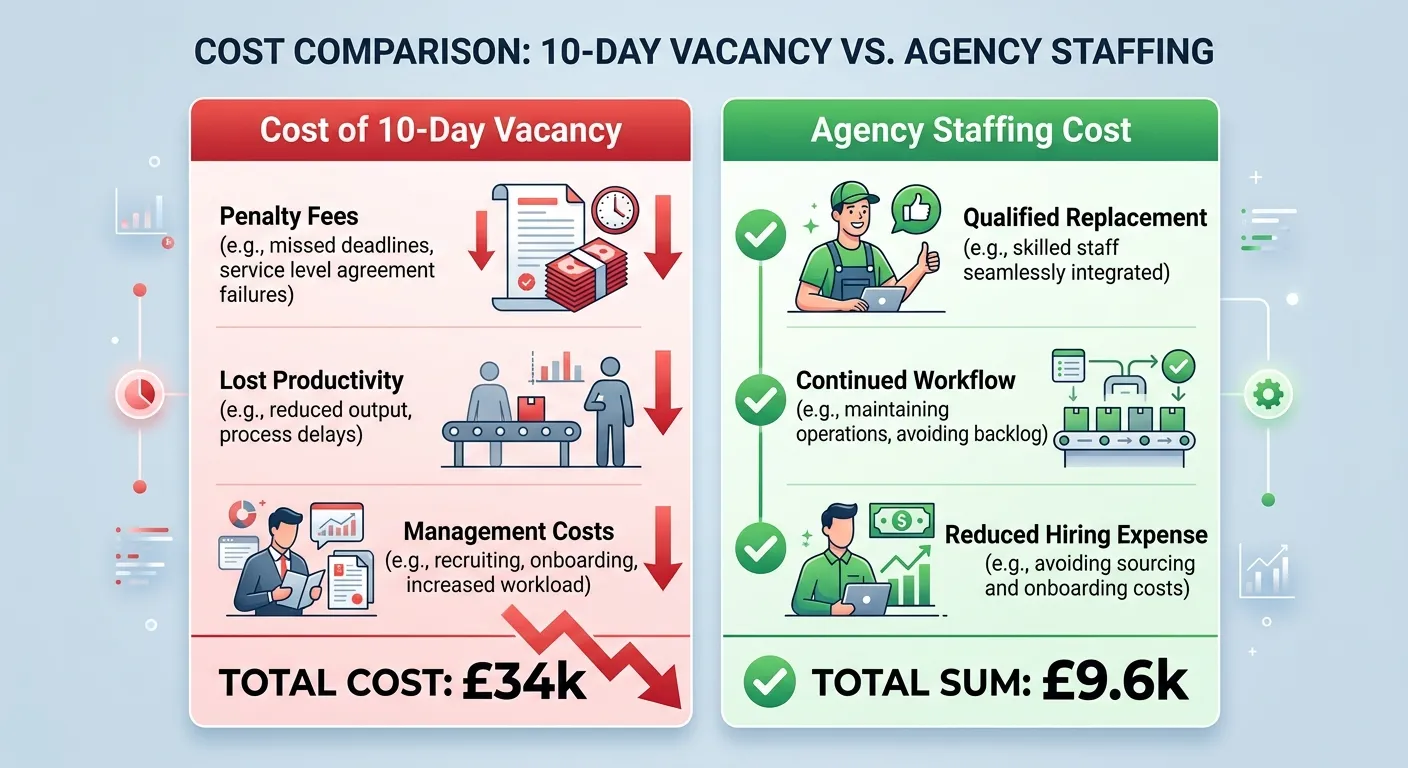
For employers, the agency bill rate will include these wages plus employer NIC, apprenticeship levy, agency margin, and coverage for annual leave—typically resulting in a multiplier of 1.25 to 1.4 on the pay rate. While this may seem high, it must be weighed against the hidden costs of a vacancy: project delays, missed deadlines, and managerial time spent recruiting.
Case Study: The Cost of Delay vs. Agency Speed
A mid-sized contractor on a Thames-side residential refurbishment faced a critical shortage when three labourers left simultaneously. The project manager estimated a traditional hire would take 10 working days. Let's compare the financial impact:
The Financial Breakdown
- Direct Delay Cost: £2,500/day penalty for missing phase deadline. £25,000
- Lost Productivity: Trades unable to work at full capacity. £8,000
- Managerial Recruitment Hours: 40 hours of lost focus. £1,200
- Total Cost of 10-Day Vacancy: £34,200
- Agency Solution Cost: 3 labourers for 10 days at premium bill rate. £9,600
- NET SAVINGS via Agency: £24,600
This stark contrast highlights why savvy project managers treat reliable labour access not as a cost, but as a form of project insurance. The agency's ability to fill the gap within 24 hours saved the project's profitability.
Technology's Role in Modern Labouring Jobs
The image of a labourer has evolved. While physical strength remains key, technology is now deeply embedded in the role, creating new specialisations and efficiency gains. The most sought-after labourers in 2026 are those who embrace these tools.
Digital Site Induction & Access
Gone are the days of paper-based sign-ins. Major London sites now use apps like XYZ SiteAccess for digital inductions, competency checks, and QR-code entry. Labourers must be comfortable using a smartphone to confirm site rules, watch safety videos, and log their attendance, streamlining the start of each shift.
Telematics & Plant Operation
Modern excavators and dumpers are equipped with GPS and telematics. Labourers operating plant may need to interact with in-cab screens monitoring fuel efficiency, load weights, and maintenance alerts. This data-driven approach reduces wear-and-tear and improves site safety, creating a new layer of responsibility for the operator.
Logistics & Inventory Apps
In warehouse and logistics roles, labourers routinely use handheld RFID scanners and inventory management software like SAP or Oracle. Accuracy in scanning goods, updating locations in real-time, and fulfilling digital pick-lists is as important as physical handling. This integration is a prime example of the convergence of labour and technology in the supply chain.
For agencies, this tech shift means vetting must now include digital literacy assessments. Can the candidate navigate an app-based timesheet? Do they understand basic device use? This ensures placements are seamless from day one. Forward-thinking agencies are incorporating this into their screening processes, as outlined in our guide on future-proofing your team.
For Job Seekers: How to Stand Out & Secure Top London Labouring Jobs
With high demand comes high competition. The best-paying and most reliable labouring jobs in London go to candidates who present themselves as professionals. Here’s a step-by-step guide to becoming a highly sought-after labourer.
Building Your Professional Profile
- Get Certified, Not Just Qualified.
A CSCS card is the baseline. Go beyond it. A First Aid at Work certificate, even a basic one-day course, makes you instantly more valuable. Manual Handling and Asbestos Awareness courses (often available online) show proactive safety commitment. These are low-cost, high-impact investments.
- Create a 'Construction CV'.
This isn't a standard office CV. List projects by name, value, and your specific duties ("HS2, Euston Tunnel – Material handling and site tidying for piling rig"). Mention any specialist plant you've worked near or with. Include your CSCS number and expiry date prominently. Use bullet points, not paragraphs.
- Cultivate References.
Secure written or verifiable references from gangers or site managers. A simple note confirming your punctuality, work ethic, and safety awareness is gold. Store these digitally so you can provide them instantly when an agency asks.
- Register with a Specialist Agency.
Don't just register—build a relationship. Meet your consultant, be clear about your skills and preferences (geographic areas, shift types). A good agency will fight to place reliable workers first. This is your gateway to a steady stream of work without constant job hunting.
On-Site: Behaviours That Lead to Repeat Work
Your performance on the first day often determines if you'll be asked back for a week, a month, or a full project.
The Unwritten Rules
- Early is On Time: Arrive 15 minutes before shift start, already in PPE, ready for the briefing.
- Anticipate Needs: Don't wait to be told to clear a walkway or fetch materials. Keep your eyes open and stay busy.
- Communicate Clearly: Report hazards immediately. If you don't understand an instruction, ask for clarification—safety depends on it.
- Professional Demeanour: Respect the hierarchy on site. Avoid phone use during work hours. Maintain a positive, can-do attitude even when the work is tough.
Labourers who master these professional skills become the first name on the list for new projects. They transition from being a temporary cost to a valued part of the site team, often leading to longer assignments and personal recommendations—the most powerful form of job security in this industry.