


Does HEB Hire Full Time Employees? A Complete Hiring Guide
An in-depth analysis of HEB's hiring strategies, from permanent roles to flexible staffing solutions, and how modern businesses can adapt.
Understanding HEB's Employment Model
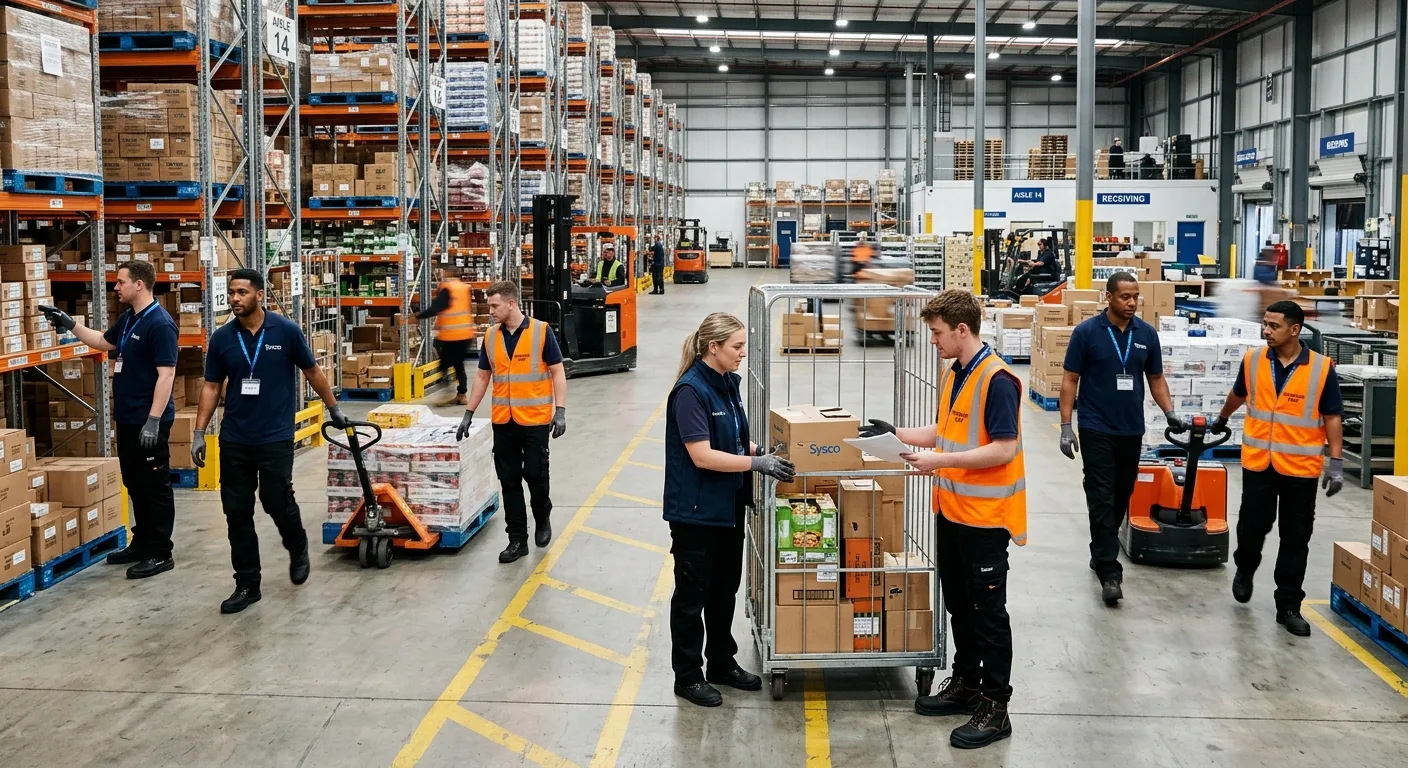
The question"Does HEB hire full time employees?" is central to understanding one of America's leading grocery chains. HEB, with its vast network of stores, warehouses, and corporate offices, operates on a hybrid employment model. While they undoubtedly hire a significant number of full-time, permanent staff for core operational, managerial, and specialized roles, they also leverage flexible staffing to manage fluctuations in demand, seasonal peaks, and project-based work. This approach mirrors a broader trend in retail and logistics, where the temporary employment agency activities meaning has evolved from simple gap-filling to a strategic workforce management tool.
For businesses looking to emulate this scalable model, understanding the balance between permanent and temporary staff is crucial. A company's ability to swiftly adapt its workforce directly impacts customer service, operational efficiency, and bottom-line costs. Whether you're in retail like HEB or managing a warehouse operation, the principles remain the same: secure your core with reliable full-time hires and augment your capacity with agile temporary talent.
Pro-Tip:
Businesses should conduct a quarterly workforce audit. Categorize roles into"Core" (needed year-round, require deep training) and"Flex" (seasonal, project-based, or variable demand). This clarifies where to invest in full-time hires versus where to partner with a staffing agency for agility.
Modern Hiring Strategies for Scalable Growth
HEB's success is partly due to its strategic staffing. They don't just ask"does HEB hire full time employees?"; they ask"what is the optimal mix of employees for each department and season?" This involves a continuous cycle of forecasting, recruiting, and evaluating. For instance, their warehouse and logistics divisions may maintain a solid base of full-time forklift operators and supervisors but rely on temporary staff during holiday rushes or new store openings.
This is where the expertise of a specialized agency becomes invaluable. For businesses needing to scale quickly—whether for a warehouse project in Leeds or an urgent helpdesk rollout in Cambridge—forging a partnership with a staffing provider is more efficient than a frantic direct-hire campaign. It provides access to pre-vetted talent pools and reduces the administrative burden of payroll, compliance, and onboarding for non-permanent roles.
Full-Time Hire vs. Temporary Staff: A Cost-Benefit Analysis
The decision between permanent and temporary staffing is financial and strategic. A full-time employee represents a long-term investment in company culture and skill development, offering stability and institutional knowledge. However, the fixed costs are high: salary, benefits, taxes, and long-term commitments. Conversely, temporary employment agency activities meaning encompasses bringing in specialists for defined periods, offering flexibility, cost-control for specific projects, and the ability to"try before you buy" for potential permanent hires.
Watch our detailed breakdown: to understand the real-world financial implications for workers and businesses. The modern approach, as detailed in our Temporary Staffing Solutions Guide, is not an either-or choice but a blended strategy. For example, a company might hire full-time hotel receptionists for its core front desk team but use temporary staff for large conferences or seasonal holiday coverage.
Actionable Steps to Optimize Your Workforce
To implement a HEB-like staffing model, start with an assessment. Map your business cycles and identify pain points. Are you losing money due to understaffed shifts, as explored in our video on The Ultimate Guide To Temp Work Staffing? Once you understand your needs, you can build a plan: secure full-time employees for your indispensable core, and establish a reliable pipeline for temporary talent for variable demand.
The most critical step is choosing the right partner. A top-tier staffing agency doesn't just fill seats; they understand your industry, comply with all regulations, and provide talent that integrates seamlessly. This transforms the simple question of"does HEB hire full time employees" into a sophisticated workforce strategy that drives growth and resilience.
Key Benefits of a Blended Workforce Strategy
Operational Scalability
Easily scale your team up or down in response to market demand, seasonal peaks, or special projects without the long-term financial commitment of additional full-time hires. This is essential for sectors like supply chain and event management.
Cost Efficiency & Control
Convert fixed labour costs into variable costs. You pay for talent only when you need it, optimizing your budget. Avoid the hidden costs of overtime, burnout, and rushed permanent hires, a topic we cover in depth on our Quick Hire page.
Access to Specialized Skills
Tap into a vast network of pre-vetted professionals for niche projects without the need for lengthy training. Need a Virtual Bot Developer in Bath or a Nuclear Engineer? Agencies provide immediate access to specialized talent pools.
Implementing the Model: From Theory to Practice
Step 1: Workforce Planning & Analysis
Before you can answer"does HEB hire full time employees" for your own business, you must analyze your workflow. Break down your annual operations. Identify your permanent core—roles that are critical to daily functions, require deep company knowledge, and justify a full-time salary and benefits. For a hotel, this might be your full-time concierge; for a clinic, your permanent doctor receptionist. Then, identify your flexible perimeter: inventory peaks, holiday rushes, maternity cover, or specific project teams (e.g., a new IT system rollout).
This analysis prevents over-hiring permanently for temporary needs, a common and costly mistake. Resources like our guide on building a stellar team can help define those core roles.
Step 2: Partnering with the Right Staffing Agency
The temporary employment agency activities meaning in today's market is about partnership. You need an agency that acts as an extension of your HR department. Look for providers with expertise in your sector, whether it's field operatives in DY4 or medical writers in NG23. They should handle recruitment, screening, compliance, payroll, and performance management for the temporary staff, freeing your team to focus on integration and core business activities.
A good agency provides more than bodies; they provide solutions, risk mitigation, and strategic advice. Explore our full suite of staffing services to understand the depth of support available.
Step 3: Integration & Management
Successful blended workforce management hinges on integration. Temporary staff must feel part of the team to be productive. Clear onboarding, defined objectives, and inclusive communication are key. Use technology to manage schedules and communication seamlessly between permanent and temporary team members.
This approach also serves as a powerful recruitment channel. Many businesses use temporary assignments as extended interviews, converting top-performing agency staff into full-time employees. This"try before you buy" model significantly reduces hiring risk and improves long-term retention, answering the broader question behind"does HEB hire full time employees" with a resounding"yes, and they often find them through flexible staffing channels first."
Frequently Asked Questions
HEB utilizes both direct hiring and staffing partnerships. They have a robust careers website and internal HR for core, permanent roles in management, corporate, and long-term store positions. However, for high-volume, seasonal, or specialized project work—particularly in distribution and logistics—they often partner with staffing agencies to efficiently scale their workforce. This hybrid model is best practice for large retailers.
It has evolved far beyond simple temp-to-fill. Modern temporary employment agency activities encompass strategic workforce consulting, on-demand talent platforms, managed service provision (MSP), and employer-of-record services. Agencies provide compliance expertise (e.g., right-to-work, industry-specific certifications), handle payroll and benefits for temps, and use data analytics to help clients forecast staffing needs. They are integral partners in building agile, resilient businesses.
The fastest route is to engage a specialized staffing agency with an existing talent pool. At Temporary Staff Agency, our Find Staff service is designed for urgent placements. We maintain networks of pre-vetted candidates across sectors, from warehouse operatives to IT specialists, enabling us to fill roles often within 24-48 hours, much faster than traditional hiring cycles.
Not when you consider the Total Cost of Employment (TCE). For a full-time employee, TCE includes salary, benefits (healthcare, pension), payroll taxes, recruitment costs, training, equipment, and potential severance. For temporary staff, the agency fee covers most of these. For short-term needs or variable demand, using temporary staff is often more cost-effective by avoiding fixed overhead. Our video breaks down this comparison in detail.
Ready to Optimize Your Workforce?
Whether you're looking to secure dedicated full-time talent or build a flexible, scalable perimeter team, the right strategy starts with the right partner. Don't just wonder"does HEB hire full time employees"—learn how to implement their winning hybrid model in your own business.
Need immediate staffing solutions? Browse our homepage for our latest urgent roles and services.
Real-World Case Study: Seasonal Surge in Retail Logistics
To move beyond theory, let's examine a hypothetical but highly realistic scenario inspired by HEB's operations. Imagine a regional distribution center preparing for the Thanksgiving-to-New-Year holiday surge. Historical data predicts a 220% increase in order volume over a 10-week period. The center's permanent workforce of 150 full-time warehouse associates, packers, and forklift operators is insufficient to meet this demand without dangerous levels of overtime, leading to burnout, errors, and potential safety incidents.
The management team, applying a strategic blended model, partners with a staffing agency six weeks in advance. The agency deploys a contingent workforce of 80 temporary workers, including:
- 50 General Warehouse Associates: For picking, packing, and loading, trained on specific workflows over a 2-day onboarding program.
- 20 Reach Truck/Forklift Operators: Provided with verified certifications and site-specific safety assessments.
- 10 Inventory Control Clerks: To manage cycle counts and data entry, preventing stock discrepancies during the chaotic peak.
The result? The center meets its surge targets without a single incident of mandatory overtime for its core staff, maintains a 99.7% order accuracy rate, and completes the season without a single lost-time injury. The total cost, while significant, was 35% lower than the projected cost of hiring, training, and then laying off direct employees, or paying exorbitant overtime rates. This case illustrates that the question isn't just"does HEB hire full time employees," but"how does HEB scale its employee base intelligently?"
The Role of Technology & Data in Workforce Management
Modern blended workforce strategies are powered by sophisticated technology platforms that many leading staffing agencies and internal HR departments now use. These systems provide a single pane of glass for managing both permanent and temporary staff, which is critical for operational cohesion.
Key Technological Capabilities:
- Integrated Scheduling & Timekeeping: Apps that allow managers to create shift schedules that seamlessly blend agency workers with direct hires, track attendance in real-time, and manage clock-ins/outs from a single dashboard, eliminating double-entry and confusion.
- Performance Analytics Dashboards: Data on productivity, quality, and attendance for all workers, enabling managers to identify top performers (ideal for temp-to-perm conversion) and address issues promptly. This turns subjective management into data-driven decision-making.
- Compliance & Credential Management: Automated systems to track expiring certifications (e.g., forklift licenses, food safety cards), right-to-work documents, and training completions for the entire workforce, mitigating legal and safety risks.
- Demand Forecasting Tools: AI-driven software that analyzes sales data, seasonality, and promotional calendars to predict staffing needs weeks or months in advance, allowing for proactive, rather than reactive, temporary staff bookings.
For a business looking to implement this model, choosing a staffing partner with robust technological integration is as important as their recruitment network. This tech stack is what transforms the temporary employment agency activities meaning from a transactional service into a strategic, insight-driven partnership. Explore how technology impacts roles like a Payroll Clerk in our dedicated resources.
Beyond Retail: Applying the Model in Specialized Sectors
While HEB provides a perfect retail/logistics example, the blended workforce model is revolutionizing other industries where project work, regulatory cycles, or innovation sprints create variable demand for highly specialized skills.
1. Pharmaceutical & Life Sciences:
A drug company approaching a key FDA submission deadline needs a surge of medical writers, regulatory affairs specialists, and clinical data managers. Hiring these experts full-time post-approval would be unsustainable. A scientific staffing agency provides a pre-vetted team for the 6-month crunch period, ensuring the submission is robust and on time, after which the contingent team scales down.
2. Technology & Cybersecurity:
A financial institution discovers a critical vulnerability in its software. Its internal security team is fully allocated. Engaging a cyber staffing agency, they immediately onboard three penetration testers and a threat intelligence analyst on a 90-day contract to remediate the issue. This provides elite, focused talent without the year-round salary burden of a full-time red team, answering a specialized version of"does HEB hire full time employees" with a sector-specific"not for every need."
3. Creative Industries & Marketing:
An agency lands a major automotive campaign. They have core staff for strategy and account management but need a temporary pod of video editors, 3D animators, and copywriters for the 4-month production phase. A creative staffing partner assembles the team, managing their contracts and payments, allowing the agency to deliver a world-class product without permanently inflating its headcount.
These examples prove that the blended model is a universal business strategy, not confined to hourly work. It's about accessing expertise on demand, whether that expertise is stacking pallets or writing complex clinical trial reports.
More FAQs on Workforce Strategy
Culture is communicated through actions, not just tenure. Include temporary staff in relevant team meetings and briefings. Assign a"buddy" from the core team to help them navigate processes and social norms. Most importantly, ensure they understand how their specific role contributes to the company's mission during their assignment. A good staffing agency will brief candidates on your company's values and environment before placement. When temporary staff feel respected and included, they become powerful brand ambassadors.
Key risks include misclassification (treating a temp as an employee without providing benefits), co-employment liability, and compliance with workplace safety and anti-discrimination laws. A reputable staffing agency acts as the Employer of Record (EOR), assuming these liabilities. They handle workers' compensation, unemployment insurance, payroll taxes, and ensure all labour laws are followed. This transfer of risk is a fundamental value proposition of the agency model. Always work with accredited, insured agencies with deep compliance expertise in your jurisdiction and industry.