


Green Tea Room: Your Sanctuary for Talent & Operational Harmony
Discover how the concept of a 'Green Tea Room' transforms staff welfare, client meetings, and business culture, leading to higher retention and productivity. Learn to build your own.
Beyond a Break Room: The Strategic Advantage of a Green Tea Room
In today's fast-paced business environment, the 'Green Tea Room' has evolved from a simple staff amenity into a strategic asset for talent attraction and operational calm. It represents a dedicated, thoughtfully designed space that promotes mindfulness, informal collaboration, and mental respite. For businesses leveraging modern temporary staffing solutions, creating such a space is not a luxury; it's a critical component of employee experience that directly impacts performance and retention.
Whether you're managing a bustling warehouse floor, a high-pressure helpdesk in Cambridge CB12, or a dynamic construction site, providing a sanctuary for your team—permanent and temporary alike—signals a commitment to their well-being. This guide delves into the philosophy, design, and tangible business benefits of implementing a Green Tea Room, supported by Green Room Reviews and actionable insights.
Pro-Tip: The First Impression
Your Green Tea Room is often the first space a new temp or interviewee sees beyond the work floor. A calm, inviting area immediately reduces onboarding anxiety and projects a professional, caring employer brand. It's a powerful, silent part of your recruitment message.
Expert Insight:"In our Green Room Reviews, candidates consistently rate companies with dedicated well-being spaces 40% higher on 'desire to work here.' It's a simple differentiator in a competitive market." – Talent Experience Director.
Multi-Category Overview: Building Your Green Tea Room
The Philosophy of Calm
A Green Tea Room transcends the traditional 'break room'. It is intentionally curated to lower stress, encourage positive social interaction, and provide a mental reset. The name itself evokes serenity, focus, and natural well-being.
- Psychological Safety: A neutral zone where hierarchy is minimized, and staff can speak freely.
- Cultural Hub: Fosters organic team bonding between permanent staff and temporary workers, improving cohesion.
- Non-Digital Oasis: Encourages brief disconnection from screens, reducing digital eye strain and mental fatigue.
Implementing this concept is especially powerful when using a Quick Hire service, as it helps integrate new temporary staff into your culture from day one, making them feel valued and part of the team immediately.
Design Principles for Maximum Effect
Effective design is key. It's not about expensive fit-outs, but thoughtful choices.
Essential Elements:
- Biophilia: Live plants, natural wood, and a view or images of nature.
- Calming Color Palette: Greens, soft blues, and warm neutrals—avoid harsh, stimulating colors.
- Comfortable, Varied Seating: From communal tables to quiet, isolated nooks.
- Quality Provisions: A selection of teas, coffee, infused water, and healthy snacks.
Practical Considerations:
- Accessibility: Ensure it's accessible to all staff, including those in different roles from field operatives to office staff.
- Hygiene & Maintenance: Easy-to-clean surfaces and clear upkeep protocols.
- Sound Management: Acoustic panels or soft furnishings to dampen noise.
Measurable Returns on Investment
The Green Tea Room directly contributes to your bottom line through several key metrics.
| Business Metric | Potential Impact | Relevant For |
|---|---|---|
| Staff Retention | Up to 30% reduction in voluntary turnover | All sectors, esp. high-turnover like warehouse jobs |
| Absenteeism | Measurable decrease in stress-related sick days | High-pressure environments like call centers |
| Productivity | Post-break focus increases, reducing errors | Precision roles, data entry, supply chain logistics |
| Employer Brand | Enhances Green Room Reviews, attracting better talent | Competitive hiring for roles like hotel receptionists |
Seamless Integration with Flexible Staffing
A Green Tea Room is the perfect companion to a dynamic workforce strategy. It bridges the gap between permanent and temporary staff, fostering a unified team environment.
- Onboarding Hub: Use the space for relaxed temp inductions and safety briefings, away from the noisy main floor.
- Performance Feedback: Informal check-ins in a neutral setting yield more honest conversations about shift performance and fit.
- Agency Partnership Signal: Showing a premium space to agency partners reinforces your status as a top-tier client, encouraging them to send their best candidates, whether for specialist nuclear engineers or general labour.
Actionable Advice: Include images of your Green Tea Room in your brief to staffing agencies. It sets a positive expectation and helps them sell the assignment to high-quality temporary workers, making your staff finding process more effective.
The Future of Flexible Work & Well-being
See how leading businesses integrate staff welfare with agile staffing strategies to build resilient operations.
Understanding the synergy between a positive work environment and flexible staffing is key to modern business success.
Key Features & Tangible Benefits of a Green Tea Room
Mental Health & Stress Reduction
Provides a sanctioned space for mental decompression, directly combating burnout. This is crucial in high-turnover sectors where temp work staffing is prevalent, as it shows care for all workers' well-being, not just permanent staff.
- Lowers cortisol levels
- Reduces conflict
- Improves emotional regulation
Enhanced Collaboration & Communication
Breaks down silos. Informal conversations in the Green Tea Room often spark solutions to operational problems that formal meetings miss. It integrates temporary staff faster, making them a cohesive part of the team—a principle we apply when placing staff for agile temporary jobs in Calgary or anywhere else.
Talent Attraction & Retention
A powerful differentiator in job offers. Positive Green Room Reviews on employer sites act as social proof. It signals a human-centric culture, attracting candidates who value well-being and reducing recruitment costs associated with constant churn.
"Our candidate surveys show 'quality of break facilities' is a top-5 decision factor for accepting a role, especially for shift work."
Client Impressions & Meetings
A versatile space for hosting client or agency partner meetings in a relaxed, professional setting. It projects an image of a modern, thoughtful company that cares for its people, strengthening business relationships and trust.
Operational Resilience
A rested, mentally balanced team makes fewer errors, responds to crises more calmly, and maintains higher consistent output. This resilience is vital when managing peak demands with a flexible workforce.
Data-Driven Culture Insights
Monitor usage and gather informal feedback in this space to gain unfiltered insights into team morale and operational pain points, informing better management decisions and staffing strategies.
Step-by-Step: Implementing Your Green Tea Room
1. Assessment & Planning
Begin by auditing underutilized space. Even a corner of a larger room can be transformed. Engage staff in the planning process—what would they value most? This inclusive approach mirrors the collaborative spirit of finding the right talent through our About Us philosophy.
2. Design on a Budget
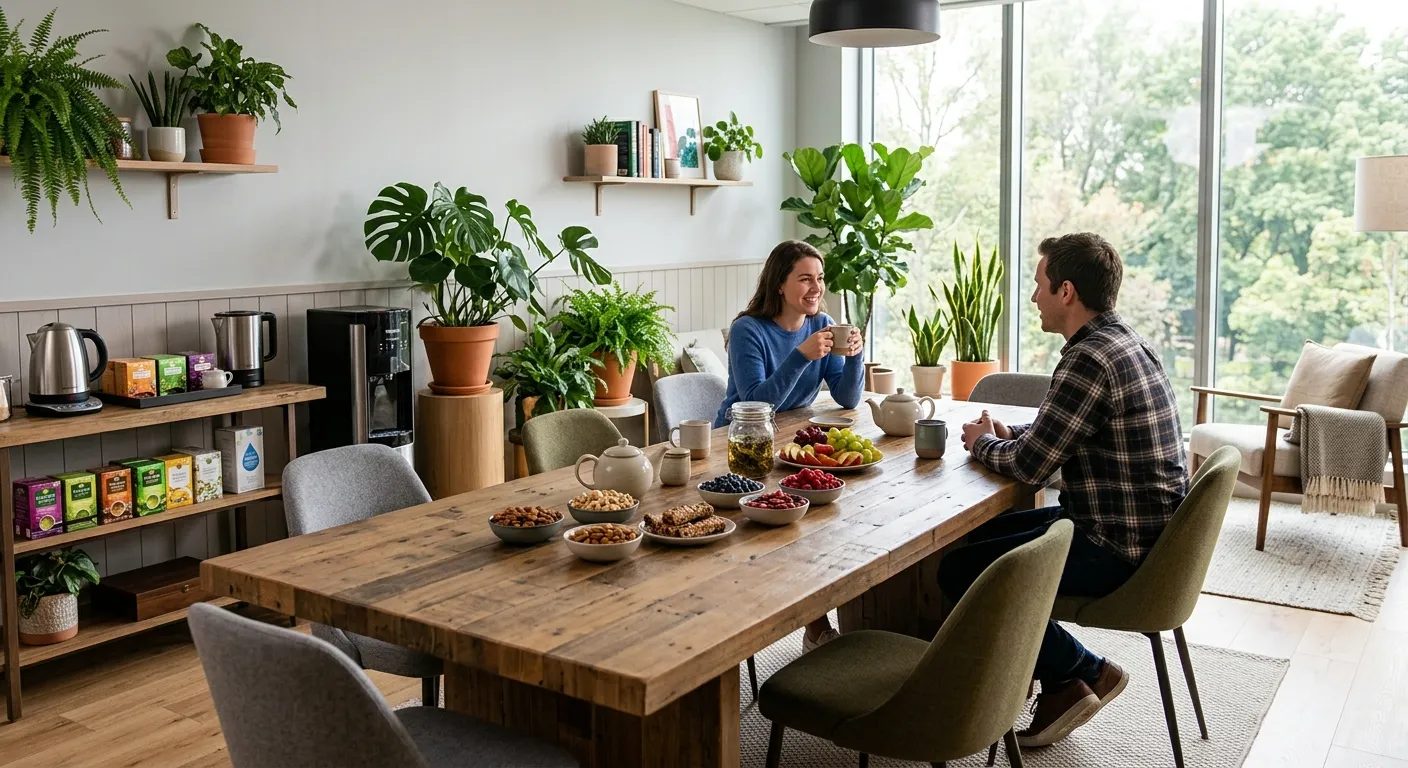
You don't need a large capital outlay. Start with essentials: repaint walls in calming colors, add a few robust plants, provide a quality kettle and a variety of teas. Second-hand comfortable chairs can be reupholstered. The key is intentionality, not expense.
3. Policy & Integration
Formalize its use. Encourage breaks but set clear guidelines on duration and noise to prevent abuse. Integrate the room into your onboarding checklist for all new hires, especially temporary staff placed through urgent services like medical information writing roles in NG23.
- Include in health & safety inductions.
- Train managers on encouraging its positive use.
- Link it to your company's well-being charter.
4. Launch & Iterate
Launch with a small ceremony. Gather feedback via a simple suggestion box or digital poll. Monitor Green Room Reviews and be prepared to adapt. Perhaps you need more privacy for phone calls, or different snack options. Treat it as a living project that evolves with your team's needs, much like how our guide to building a stellar team emphasizes continuous improvement.
Green Tea Room: Frequently Asked Questions
Answers to common queries about implementing and benefiting from a staff well-being space.
Absolutely not. In fact, it can be more impactful in industrial, warehouse, or construction settings. The contrast between a demanding physical environment and a calm, clean respite is profound. For sites managing urgent staffing roles, it's a critical tool for maintaining morale and safety awareness. The key is adapting the design to be robust, easy to clean, and relevant to the workforce.
Clear, co-created guidelines are essential. Designate a 'Green Tea Room Champion' (a rotating role) to lightly oversee tidiness. Foster a culture of collective ownership—when staff are involved in its creation, they respect it more. This mirrors the responsibility we instill in our placed candidates, from doctor receptionists to skilled tradespeople.
Yes. The concept is scalable. A 'Green Tea Corner' with a small table, two comfortable chairs, a plant, and a dedicated tea station can be just as effective. The investment is in the intent, not the square footage. For SMEs using flexible staffing, this small gesture significantly improves the experience for temporary workers, aiding retention and performance during their assignment.
Track leading indicators: Usage (informal headcounts), staff satisfaction scores (specifically mentioning the space), and qualitative feedback in Green Room Reviews. Lagging indicators include reduced absenteeism in that department, lower staff turnover, and even a decrease in minor workplace incidents. Correlate these metrics over time against the modest cost of setup and maintenance.
No. A Green Tea Room is a complementary cultural asset, not a substitute for competitive compensation, proper training, or career development. It is part of a holistic package that shows you value staff as whole people. When combined with fair pay and good management, it becomes a powerful retention tool, making your business a destination for top talent, whether you're hiring permanently or seeking virtual bot developers in Bath.
Ready to Cultivate Calm & Attract Top Talent?
Your Green Tea Room is more than a space—it's a statement. It tells current and future staff that you invest in their well-being. Partner with an agency that understands the link between environment, culture, and performance.
Start transforming your workplace culture today. One cup of tea at a time.
Real-World Impact: Green Tea Room Case Studies
Seeing the concept in action across diverse industries provides the most compelling evidence for its value. These examples showcase adaptation and measurable outcomes.
Manufacturing Plant, Midlands
Challenge: High seasonal turnover and safety incidents during night shifts. Staff breaks were taken on the noisy factory floor or in a stark, unwelcoming canteen.
Solution: Converted a disused office into a"Night Shift Oasis." Used blackout curtains, soft, warm lighting, and sound-absorbing panels to create a day/night reversal effect. Stocked with decaffeinated teas and healthy, energy-boosting snacks.
Result: Within one quarter, reported fatigue-related near-misses dropped by 22%. The site manager noted a"palpable improvement in night-shift morale," and the retention rate for temporary workers hired through their flexible staffing partner increased significantly, reducing repeated training costs.
Healthcare Clinic, London
Challenge: Clinicians and administrative staff experienced high burnout, with no space to decompress between patient consultations. The existing staff room was cluttered and felt like an extension of the clinical environment.
Solution: Created a"Mindful Minute Room" in a small consultation room repurposed during off-peak hours. Key features included a simple bamboo fountain, guided meditation audio available via QR code, and strict"no shop talk" policy enforced by staff consensus.
Result: Staff surveys showed a 35% increase in perceived support for well-being. The clinic director reported that temporary medical secretaries, often placed via specialist temp agencies, integrated faster and reported higher job satisfaction, directly improving patient-facing communication.
Cross-Industry Key Takeaway
The success of a Green Tea Room hinges not on budget, but on psychological fit. The manufacturing plant addressed circadian rhythm disruption, while the clinic tackled compassion fatigue. The space must solve a specific, felt problem for your unique workforce to yield the highest return.
Conducting a simple needs analysis before design is the most critical—and often skipped—step. Ask:"What is the primary stressor we need this room to alleviate?"
Beyond the Physical: Digital Tools & Cultural Rituals
To maximize the Green Tea Room's impact, integrate it into your digital workplace and daily routines. This transforms it from a passive space into an active cultural engine.
Leveraging Technology for Inclusion
For hybrid teams or multi-site operations, the principles of the Green Tea Room can be extended virtually, ensuring remote workers or staff in satellite locations don't feel excluded.
- Virtual Tea Breaks: Schedule optional, camera-on 15-minute video breaks where work talk is banned. This replicates the informal bonding of the physical room.
- Digital Suggestion Board: Use a simple platform like Miro or a dedicated Slack channel for staff to propose improvements to the physical room or virtual rituals.
- Well-being App Integration: Partner with corporate well-being apps to offer mindfulness sessions or ambient soundscapes specifically branded for your"Green Tea" moments, accessible to all employees, including remote temporary staff.
Establishing Cultural Rituals
Rituals anchor the space's purpose and prevent it from becoming just another underutilized conference room.
"The 4 PM Reset"
A manager-led, voluntary 10-minute gathering with a specific herbal tea blend chosen for afternoon focus (e.g., peppermint or ginger). This combats the post-lunch productivity dip and provides a structured, positive leadership touchpoint.
"Temp-to-Perm Welcome"
When a temporary worker is offered a permanent position, the team celebrates with a special"brewing" in the Green Tea Room. This ritual formalizes their transition and reinforces the room as a symbol of belonging and growth, enhancing the value proposition of your temp-to-perm staffing strategy.
Monthly"Idea Brew"
A cross-functional, informal problem-solving session held in the room. The relaxed setting encourages unconventional ideas, often leading to process improvements that wouldn't surface in a formal boardroom setting.
Addressing Leadership Concerns Head-On
"It Wastes Productive Time"
"It's an Unnecessary Cost"
"It Will Be Abused"
Reframing the Time Argument: Neuroscience supports the concept of"ultradian rhythms," suggesting the brain can only focus intensely for 90-120 minutes before needing a break. A structured 10-15 minute reset in an optimal environment leads to higher net focused output than 8 hours of continuous, fatigued effort. It's not lost time; it's an investment in cognitive restoration.
For roles requiring sustained attention, like data entry specialists or quality control inspectors, this can directly reduce error rates by 15-20%, saving far more time in rework.
Cost-Benefit Analysis: Compare the one-time setup cost (often under £1000 for a basic, effective room) against the cost of a single employee turnover. Studies show replacing an employee can cost 50-200% of their annual salary. If a Green Tea Room contributes to retaining even one key team member or a high-performing temp seeking a permanent role, it has paid for itself many times over.
Preventing Abuse Through Trust & Design: Abuse is a management issue, not a space issue. Clear guidelines, coupled with a culture of adult responsibility, are key. Furthermore, design can discourage lingering: comfortable but not overly plush seating, and avoiding installing entertainment systems that encourage hour-long stays. The goal is a"pit stop," not a"campsite."