Global Forklift Operator Hiring Abroad: Your Strategic Guide to Securing Elite Talent
Navigate the complexities of international logistics staffing. Discover proven strategies for Forklift Operator Hiring Abroad to build a resilient, skilled, and compliant global workforce.
Mastering International Forklift Recruitment: A Multi-Faceted Approach
Global Talent Pools & Strategic Sourcing Channels
Effective Forklift Operator Hiring Abroad begins with identifying the right talent reservoirs. This extends beyond generic job boards to include specialized logistics forums, international trade school partnerships, and industry-specific recruitment networks in target countries.
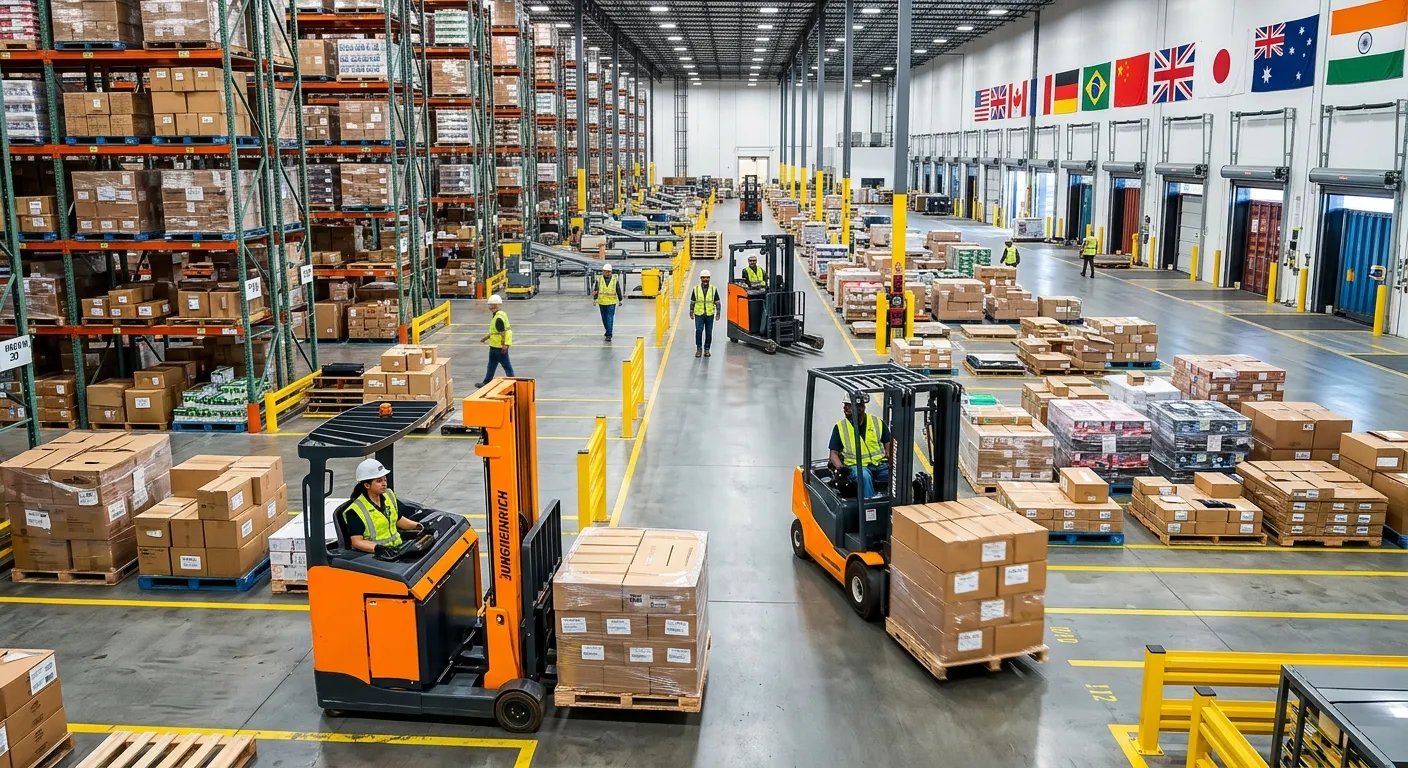
For instance, tapping into established logistics hubs in Eastern Europe or Southeast Asia can yield operators with experience in high-volume, cross-dock environments. Partnering with a specialized agency that understands both the technical skill requirements and the cultural nuances of warehouse operations is crucial. This approach is similar to the targeted methodology used for securing hotel receptionists, where niche expertise drives quality hires.
Pro-Tip:
Leverage temporary-to-permanent models. Hiring operators initially on a temporary basis through a global staffing partner allows for a low-risk assessment of skills and cultural fit before committing to a permanent international relocation package.
Navigating Work Visas, Licenses & Local Regulations
The legal labyrinth of international hiring is the most significant barrier. Forklift certification (like OSHA in the US, ITSSAR in the UK, or DGUV in Germany) is often not directly transferable. A comprehensive compliance strategy must address:
- Visa Sponsorship: Understanding Tier 2 (UK), H-2B (US), or EU Blue Card pathways and associated costs.
- License Conversion: Planning for mandatory local certification courses and tests upon the operator's arrival.
- Employment Law: Adhering to local contracts, minimum wage, working time directives, and termination laws.
Failure to manage this correctly can lead to severe penalties and operational shutdowns. Engaging experts who manage temporary staffing solutions for modern businesses internationally can mitigate these risks, as they maintain up-to-date knowledge of fluid immigration policies.
Evaluating Technical Proficiency & Soft Skills Remotely
Assessing a forklift operator's skill from thousands of miles away requires innovation. Beyond verifying certificates, implement structured digital assessments:
- Virtual Simulation Tests: Use forklift simulator software to evaluate operational decision-making, load handling, and safety awareness.
- Scenario-Based Video Interviews: Present real-world warehouse challenges (e.g.,"A pallet is unstable, what's your sequence of actions?").
- Language & Communication Checks: Ensure proficiency in the operational language (e.g., English for radio communication) to prevent safety incidents.
This rigorous approach mirrors the assessment depth needed for technical roles like an IT Support Technician, where both hard skills and problem-solving under pressure are critical.
Onboarding, Cultural Integration & Long-Term Retention
Hiring is only half the battle. Successful integration is key to retention. A dedicated onboarding program for international hires should include:
- Pre-arrival Support: Assistance with housing, bank accounts, and local registration.
- Cultural Orientation: Training on local workplace norms, safety culture, and team dynamics.
- Mentorship Programs: Pairing with a seasoned local operator to accelerate acclimatization.
- Clear Career Pathways: Demonstrating opportunities for advancement within the global organization.
Investing in integration reduces turnover, protecting your significant investment in Forklift Operator Hiring Abroad. For insights into building a cohesive team, review our resource on building a stellar team.
Why Invest in Global Forklift Operator Hiring?
Expanding your recruitment borders for forklift operators solves critical operational challenges and delivers measurable competitive advantages.
Access to Specialized, Scarce Skills
Local markets often face shortages of operators experienced with specific equipment (e.g., narrow-aisle reach trucks, container handlers) or industries (e.g., cold storage, automotive JIT). Global hiring opens pools of talent with these niche, certified skills, ensuring your operations aren't hampered by local talent gaps.
Improved Cost Efficiency & ROI
While upfront costs exist, strategic international hiring can lead to long-term savings through reduced overtime, lower turnover (due to careful selection and integration), and increased productivity from highly motivated employees. It also mitigates the exorbitant cost of prolonged vacancy and project delays.
Enhanced Operational Resilience
Diversifying your workforce geographically builds resilience against local economic shocks, seasonal flu outbreaks, or regional transport strikes. A globally sourced team provides a buffer, much like how agile temporary staffing models protect businesses from unexpected demand spikes or staff shortages.
24/7 & Multi-Shift Coverage Capability
For operations running across multiple time zones or 24-hour shifts, hiring from abroad can help fill less desirable night or weekend shifts with operators for whom the wage represents a significant opportunity, ensuring consistent coverage and throughput without overburdening local staff.
Knowledge Transfer & Process Innovation
Operators from different logistics backgrounds bring fresh perspectives on efficiency, safety, and warehouse organization. This cross-pollination of ideas can lead to innovative process improvements that boost your entire operation's performance, fostering a culture of continuous improvement.
Strategic Scaling for Growth
When expanding into new markets or scaling up for major contracts, the ability to rapidly deploy pre-vetted, skilled forklift operators from abroad can be a game-changer. It allows for agile scaling without the lead time of local recruitment, keeping projects on schedule. This is a core principle behind our Quick Hire service philosophy.
A Step-by-Step Blueprint for Successful International Hiring
Transforming the concept of Forklift Operator Hiring Abroad into a seamless, repeatable process requires a meticulous, phased approach.
Phase 1: Preparation & Market Analysis (Weeks 1-4)
Before posting a single job advert, conduct thorough groundwork.
- Define the Exact Profile: Beyond"forklift driver," specify truck types (counterbalance, reach, order picker), required experience (years, industries), and essential soft skills (teamwork, English level).
- Identify Target Countries: Analyze countries with a surplus of qualified logistics talent, favorable visa schemes for skilled trades, and compatible certification frameworks.
- Budget & Total Cost of Employment (TCE): Calculate all-in costs: recruitment fees, relocation, visa sponsorship, salary, benefits, and integration support. Compare against the cost of local vacancy.
- Select Your Recruitment Model: Decide between using a global staffing agency, establishing a local entity, or using an Employer of Record (EOR) service.
Expert Insight:
"The preparation phase is where most failures originate. Underestimating visa processing times or certification conversion hurdles can derail an entire project. Partner with experts early." – Global Logistics HR Director.
Video: How to Recruit Forklift Drivers for Your Warehouse | 10 Smart Hiring Tips
Phase 2: Sourcing, Screening & Selection (Weeks 5-10)
This is the execution core, leveraging technology and expert judgment.
- Multi-Channel Campaign: Launch targeted ads on international job boards, LinkedIn, and partner with local agencies in the source country.
- Rigorous Digital Screening: Use AI-powered tools to filter for key criteria, followed by manual CV review focused on career continuity and relevant experience.
- Structured Virtual Assessment: Conduct a multi-stage interview: technical (with warehouse manager), safety-focused (with H&S officer), and cultural fit (with HR). Incorporate the simulation tests mentioned earlier.
- Reference & Background Checks: Perform international background checks (criminal record, employment verification) compliant with local data protection laws (like GDPR).
Critical Checkpoint: The Offer & Pre-arrival
Once a candidate is selected, clarity is paramount:
- Detailed Offer Letter: Clearly state salary (in local currency), all benefits, relocation package, and any probationary period.
- Visa Application Kick-off: Immediately begin the sponsorship process. Delays here are the most common bottleneck.
- Pre-departure Briefing: Provide a comprehensive information pack about the destination city, company culture, and first-week schedule.
Phase 3: Arrival, Onboarding & Beyond (Week 11 Onwards)
The first 90 days determine long-term success. A structured onboarding plan is non-negotiable.
Week 1: Foundation
Airport pickup, accommodation check-in, company & safety inductions, local area tour, administrative setup (bank, phone).
Weeks 2-4: Integration
Shadowing a mentor, practical site-specific training, local license conversion course (if needed), initial performance check-ins.
Months 2-3: Performance & Support
Full integration into shift patterns, formal performance review, addressing any ongoing cultural or personal challenges, planning career development.
This holistic approach ensures your investment in Forklift Operator Hiring Abroad yields a fully productive, engaged, and retained team member. For businesses also hiring locally, similar rigorous onboarding principles apply, as seen in our guides for roles like Pharmacy Assistants or Concierge staff.
Forklift Operator Hiring Abroad: Your Questions Answered
Navigating international recruitment raises specific questions. Here are expert answers to the most common queries.
What is the typical timeline for Forklift Operator Hiring Abroad from start to finish?
The timeline varies significantly based on the source and destination countries. A realistic estimate is 12 to 24 weeks. Preparation and sourcing can take 4-8 weeks. The visa and work permit process is the most variable, ranging from 4 weeks (for some intra-EU moves) to 16+ weeks for countries like the US or UK under skilled worker routes. Factor in another 2-4 weeks for notice periods and relocation. Partnering with an experienced agency can streamline and predict this timeline more accurately.
How do we handle forklift license and certification equivalence?
Direct equivalence is rare. The standard process involves:
- Verification: Authenticate the candidate's foreign license.
- Gap Analysis: A local training provider assesses the differences in standards and regulations.
- Conversion Training & Testing: The operator undergoes a (typically shortened) local course and must pass the official practical and theory tests. The employer usually bears this cost as part of the relocation package. Planning and budgeting for this mandatory step is crucial to avoid operational delays.
Is it more cost-effective than hiring locally?
The cost-benefit analysis isn't always about a lower salary. Consider the Total Cost of Vacancy (TCV): the lost productivity, overtime payments, and missed deadlines while a role remains unfilled locally. If your local market has a severe, prolonged shortage, the upfront investment in international hiring (visa, relocation, training) can deliver a higher ROI through securing a mission-critical skill that keeps your operation running and growing. It's a strategic investment in continuity, similar to the value provided by reliable temporary staffing solutions during peak demand.
What are the biggest risks and how can we mitigate them?
Key risks include:
- Visa Denial: Mitigate by working with immigration lawyers and ensuring the candidate's profile strongly matches the visa category requirements.
- Cultural Misalignment & Early Turnover: Mitigate through robust pre-screening for adaptability, comprehensive cultural orientation, and a strong mentorship program.
- Skills Mismatch: Mitigate with rigorous, practical assessments (simulations) and a probationary period that tests on-the-job performance.
- Compliance Failures: Mitigate by using an Employer of Record (EOR) or a staffing agency that assumes legal employer liability in the host country.
Can we use a temporary staffing model for international hires?
Yes, this is a growing and effective model. A global temporary staffing agency can hire the operator as their employee in the source country and second them to work at your facility abroad. This simplifies the process immensely:
- You avoid direct visa sponsorship.
- The agency handles payroll, taxes, and compliance in the operator's home country.
- It's ideal for project-based work or to fill a gap while a permanent visa is processed.
Ready to Solve Your Skilled Forklift Operator Shortage?
Stop letting local talent gaps constrain your logistics performance. Leverage a world of qualified, motivated forklift operators. Our global staffing expertise turns the complex process of Forklift Operator Hiring Abroad into a strategic advantage for your business.
Or explore more about our comprehensive approach to building winning teams on our About Us page.